

Welcome to my list of the best oil and gas WordPress themes.
An oil and gas company can operate across multiple regions, manage complex projects, and work with highly specialized equipment—yet still look surprisingly small online.
That usually happens when the website relies on stock refinery images, vague service descriptions, and a contact page that tells visitors almost nothing.
Strong oil and gas WordPress themes should help fix that.

They need to present technical capabilities clearly, show completed projects, explain safety standards, display certifications, and guide potential clients, partners, contractors, or job applicants to the right information.
The requirements also change across the industry.
A drilling contractor needs space for equipment, field services, and operating locations.
A refinery may focus more on processing capacity, compliance, and facilities.
Fuel distributors, pipeline companies, and energy consultants each need a different structure again.
I reviewed the themes below with those differences in mind.
I checked how well they handle services, projects, company divisions, technical content, safety information, documents, locations, and business inquiries. Not just whether the homepage looks industrial.
Here are the most practical options for building a credible oil and gas company website that can support real business activity.
This post covers:
- Comparison Table: Top Oil & Gas WordPress Themes
- Best Oil & Gas WordPress Themes
- What An Oil And Gas Website Needs To Build Trust
- Upstream vs Midstream vs Downstream Website Needs
- Essential Pages for an Oil & Gas Company Website
- Conclusion: Pick The Ideal Oil & Gas WordPress Theme
- FAQs About Oil & Gas WordPress Themes
Comparison Table: Top Oil & Gas WordPress Themes
| Theme | Best For | Page Builder | Project Layouts | WooCommerce | Main Strength |
|---|---|---|---|---|---|
| OilDrop | General oil & gas companies | Elementor | Basic project & company content | Yes | Most balanced overall option |
| Oktan | Established industrial groups | Elementor | Service-led corporate layouts | Yes | Proven history & broad industrial coverage |
| Petroleum | Refineries & petrochemical businesses | WPBakery | Multiple portfolio grids & project pages | Yes | Strongest refinery & technical project focus |
| Gola | Modern energy companies | Elementor | Production & service layouts | Yes | Cleanest & most current design |
| Fuelgize | Fuel suppliers & distributors | Elementor | Production, service, & certificate pages | Yes | Best fit for distribution & logistics |
| Oilrigpro | Drilling & field-service companies | Elementor | Multiple portfolio grids & case-study pages | No | Strongest drilling, offshore, & pipeline focus |
Best Oil & Gas WordPress Themes
1. OilDrop
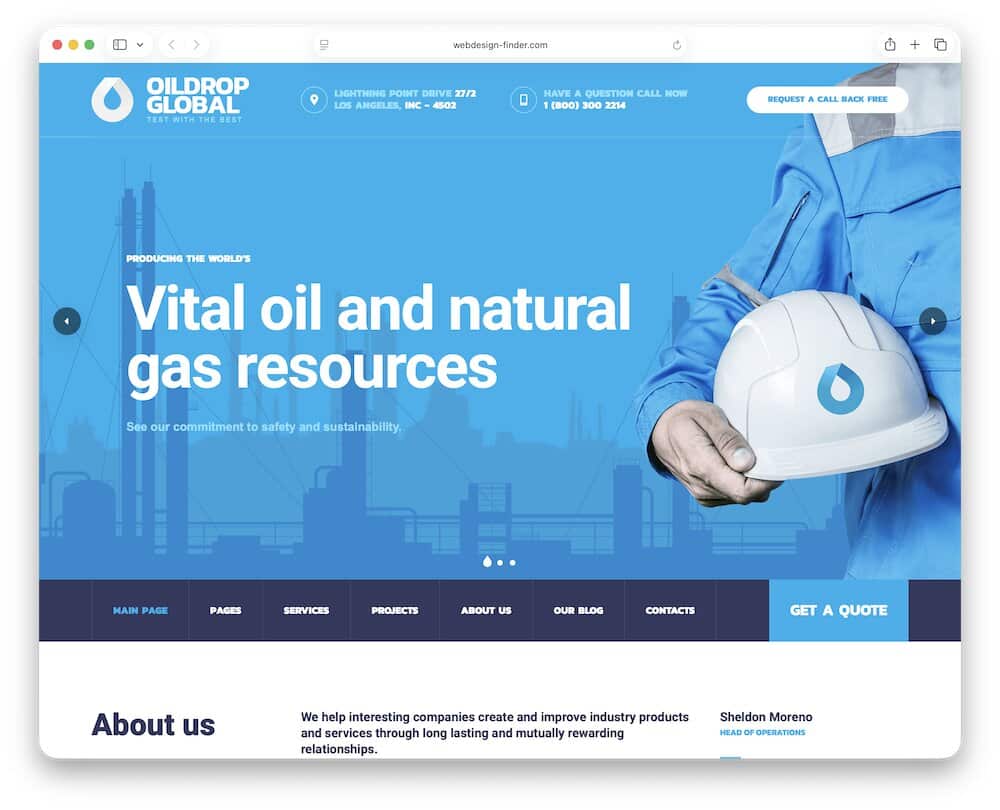
OilDrop is built specifically for oil production, gas, offshore operations, drilling equipment, chemicals, natural resources, and related engineering businesses.
Its two main demos cover oil and gas operations as well as mining and resource management.
That gives energy companies a practical foundation for presenting services, company goals, technical expertise, equipment, industry news, and business inquiries without rebuilding a broad corporate theme from scratch.
Elementor now handles the page editing, while WooCommerce adds flexibility for companies that also sell equipment, industrial components, chemicals, or related products.
The visual direction is traditional and industrial.
Large facility photography, dark backgrounds, strong accent colors, service blocks, statistics, testimonials, and news sections create an established corporate look that pops.
1.1. Why I Like OilDrop Theme
OilDrop understands that an energy company needs to explain what it does before asking visitors to make contact.
The theme provides dedicated space for services, company objectives, industry experience, blog updates, and broader technical information.
It can also adapt to drilling manufacturers, industrial gas distributors, specialty chemical suppliers, metal companies, and other businesses connected to heavy industry.
Elementor support makes it easier to personalize the design without replacing the entire structure.
My main improvement would be deeper project presentation.
The available material emphasizes services, company information, and news more than detailed case studies.
I would add structured project pages showing location, client sector, scope, equipment used, safety performance, challenges, and measurable outcomes.
Certifications, operating regions, technical capacity, safety policies, and downloadable reports also deserve more attention on a serious energy website.
1.2. OilDrop Is Good For
- Oil and gas production companies
- Offshore drilling businesses
- Petroleum equipment manufacturers
- Chemical and natural-resource companies
1.3. OilDrop WordPress theme features:
- 730+ sales
- 4.9+ star ratings
- Dedicated oil, gas, and natural-resource demos
- Elementor-based visual customization
- Price: $59
Note: A diversified factory, engineering, or energy company may also want to read my Industrie WordPress theme review.
2. Oktan
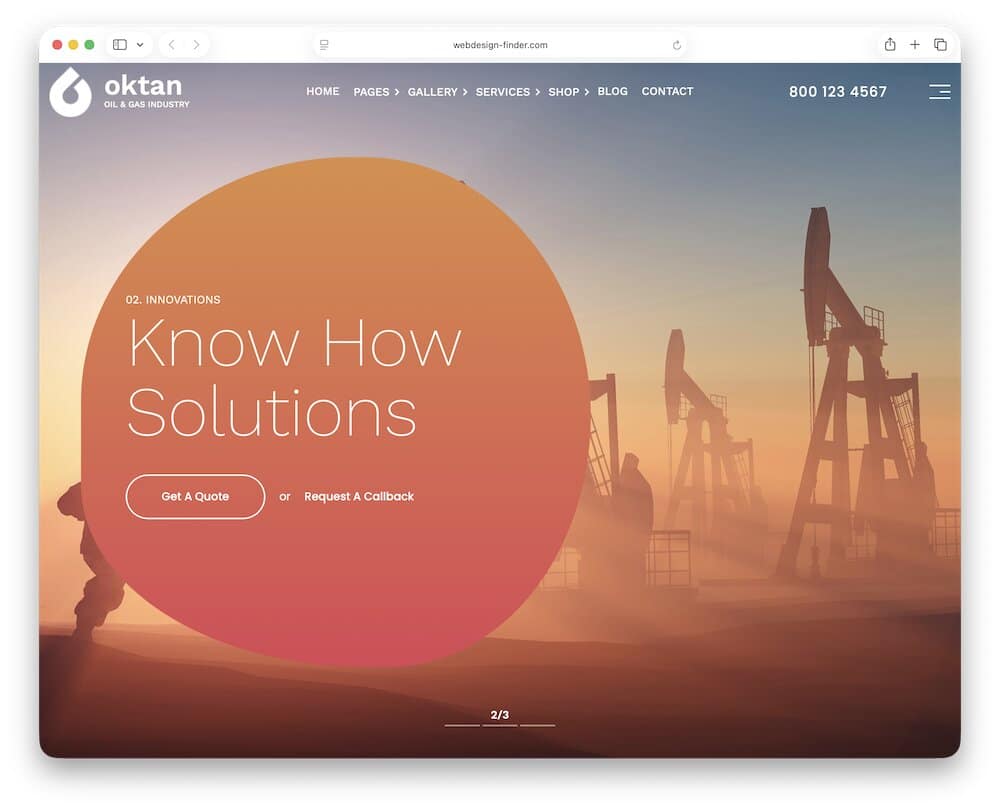
Oktan is built for oil extraction, gas equipment, petroleum services, and industrial engineering companies that need a serious corporate presence.
That broader scope can be useful for diversified energy groups whose work extends beyond oil and gas into processing, materials, or industrial production.
Elementor handles the page editing, while the demo-import wizard provides a quicker starting point for building service, About, and news pages.
WooCommerce support is also included for businesses that need to present or sell equipment, components, materials, or industrial products.
2.1. Why I Like Oktan Theme
Its broader industrial coverage is a solid advantage.
A company can use separate sections for oil extraction, engineering, chemicals, fabrication, machinery, or production without making every division look identical.
The included service, About, and blog structures provide a solid base for explaining capabilities, publishing company developments, and presenting corporate goals.
I would choose Oktan for an established organization that wants a traditional corporate website rather than a highly modern or experimental design.
My main improvement would be stronger project and compliance content.
The available listing emphasizes company information and services, but large energy businesses also need detailed project pages, safety records, certifications, operating regions, technical downloads, and sustainability reporting.
2.2. Oktan Is Good For
- Established oil and gas companies
- Diversified industrial groups
- Petroleum engineering businesses
- Chemical and materials manufacturers
2.3. Oktan WordPress theme features:
- 680+ sales
- 4.9+ star ratings
- Oil, gas, chemical, steel, and polymer demos
- Excellent buyer rating and proven sales history
- Price: $56
3. Petroleum
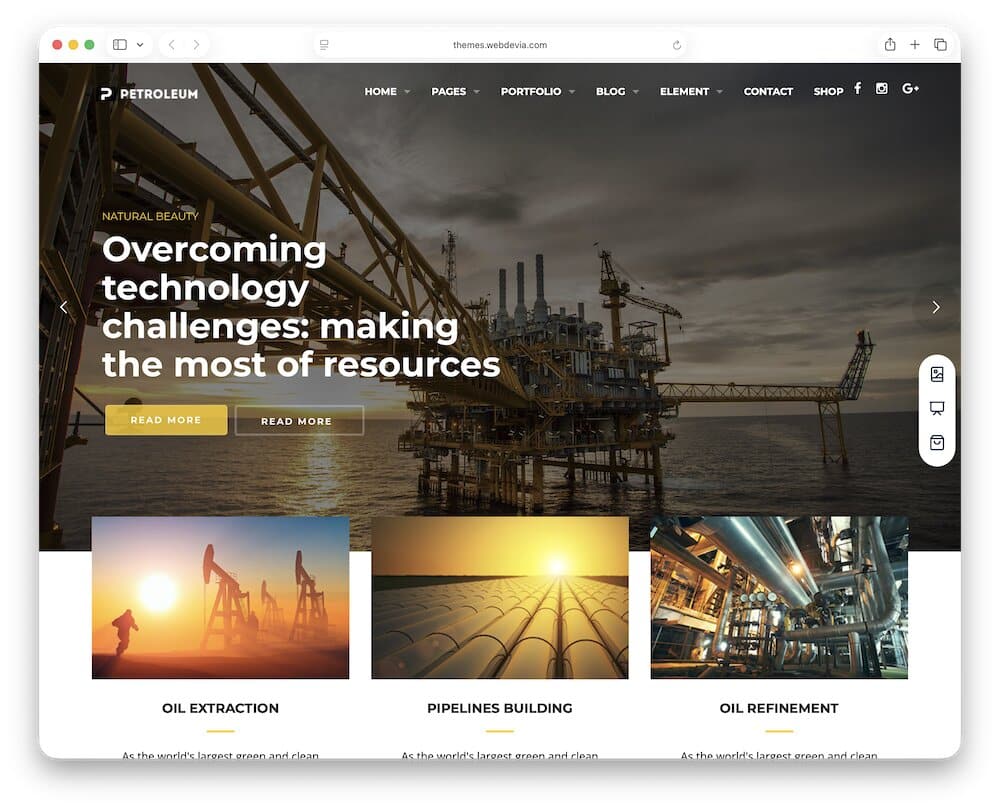
Petroleum is designed for companies involved in refining, petrochemicals, chemical production, petroleum distribution, oilfield equipment, and industrial manufacturing.
That narrower focus separates it from broader energy themes.
A refinery or processing company can use the ready-made service pages to explain production capabilities, quality control, chemical analysis, machinery, logistics, and environmental work.
Four homepage layouts provide different starting points, while the About, FAQ, contact, pricing, blog, and shop pages cover the main corporate needs.
Its strongest area is project presentation.
The demo includes two portfolio styles, two-, three-, and four-column grids, plus individual project pages.
That gives your business more room to show facilities, plant upgrades, processing projects, equipment installations, and completed contracts.
3.1. Why I Like Petroleum Theme
Petroleum provides a stronger base for technical project content than OilDrop and Oktan.
Its portfolio structure can be adapted into detailed case studies with the project location, client sector, scope, processing capacity, equipment used, safety requirements, and results.
The theme also includes service layouts, company statistics, team profiles, testimonials, client logos, FAQs, and quote-focused calls to action.
WooCommerce support adds flexibility for companies selling machinery, replacement parts, chemicals, industrial materials, or downloadable technical resources.
Moreover, WPML, Gravity Forms, Contact Form 7, Events Calendar, Easy Digital Downloads, and one-click demo import are also listed as compatible.
However, Petroleum clearly shows its age.
The styling looks more dated than newer industrial themes.
I would treat the demo as a structural starting point. The navigation, portfolio system, and corporate pages are useful, but the typography, imagery, copy, and service presentation need a thorough refresh.
However, you can easily improve it according to your needs without needing to touch a single string of code.
3.2. Petroleum Is Good For
- Oil refineries and processing plants
- Petrochemical manufacturers
- Chemical-production companies
- Petroleum wholesalers and distributors
3.3. Petroleum WordPress theme features:
- 610+ sales
- 4.4+ star ratings
- Four industrial homepage layouts
- Strong refinery and petrochemical positioning
- Price: $69
4. Gola
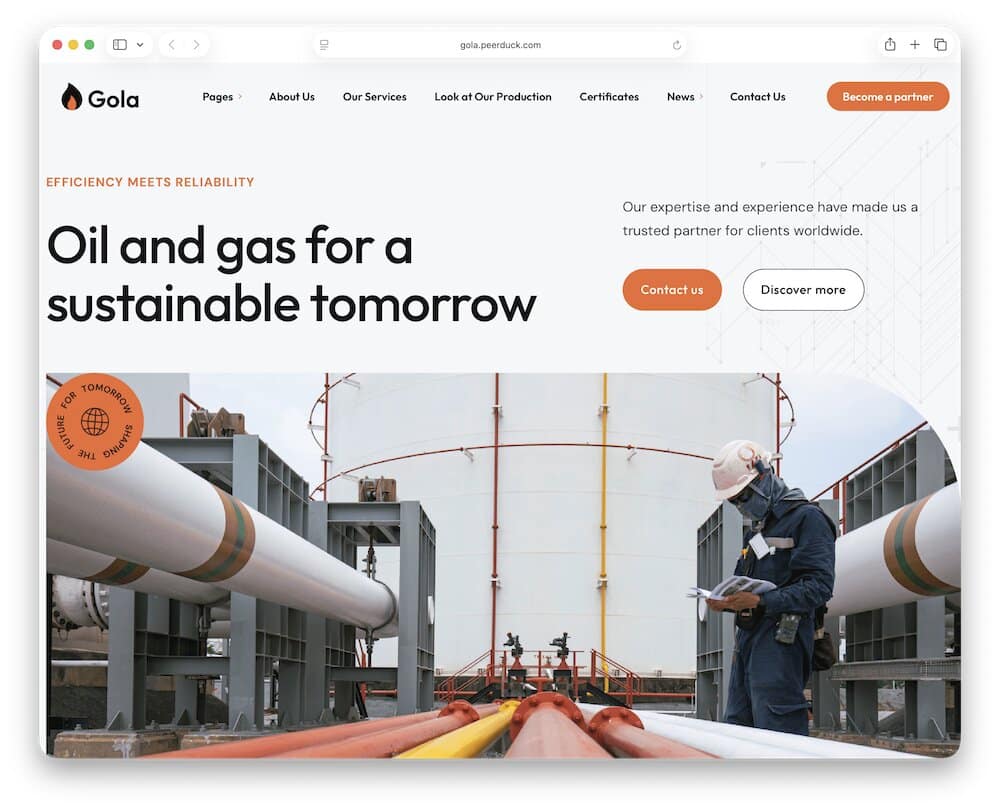
Gola is made for oil, gas, refining, fuel, engineering, and energy companies that want a modern website.
Its demo covers the full industry chain through sections for exploration and drilling, production and refining, transport and logistics, equipment, environmental services, and renewable energy.
You also get dedicated pages for company information, services, production, certificates, news, contact details, and partnership inquiries.
Compared with OilDrop, Oktan, and Petroleum, Gola uses fewer heavy visual elements.
The layout is more spacious, the service cards are easier to scan, and the calls to action stand out without taking over the page.
Note: Companies shifting more of their business toward clean power can also explore these renewable energy WordPress themes.
4.1. Why I Like Gola Theme
Gola gives energy companies more space to talk about modern topics.
The demo includes safety, sustainability, environmental services, renewable energy, certificates, company values, and careers along with standard service pages.
This helps the site feel more complete than just machinery and refinery images.
I also like the four predefined homepage options.
They let you present the company in different ways, such as corporate, industrial, or customer-focused. The production section can also be used for projects, facilities, or investments.
Elementor is used for editing, while WooCommerce, Contact Form 7, Mailchimp, Smart Slider 3, WPML, Loco Translate, and TranslatePress handle sales, forms, email, and translations.
Additionally, the one-click import and Customizer settings make setup easy.
My main concern is detail.
The demo shows services and production clearly, but the descriptions are short.
A real company would need to add more information like technical details, locations, equipment, compliance, and results.
The design is strong, but the sample content should not be used as-is.
4.2. Gola Is Good For
- Modern oil and gas companies
- Energy engineering firms
- Petroleum producers and refiners
- Diversified energy businesses
4.3. Gola WordPress theme features:
- 110+ sales
- 4.7+ star ratings
- Service coverage from drilling to logistics
- Elementor, WooCommerce, forms, and translations
- Price: $69
5. Fuelgize
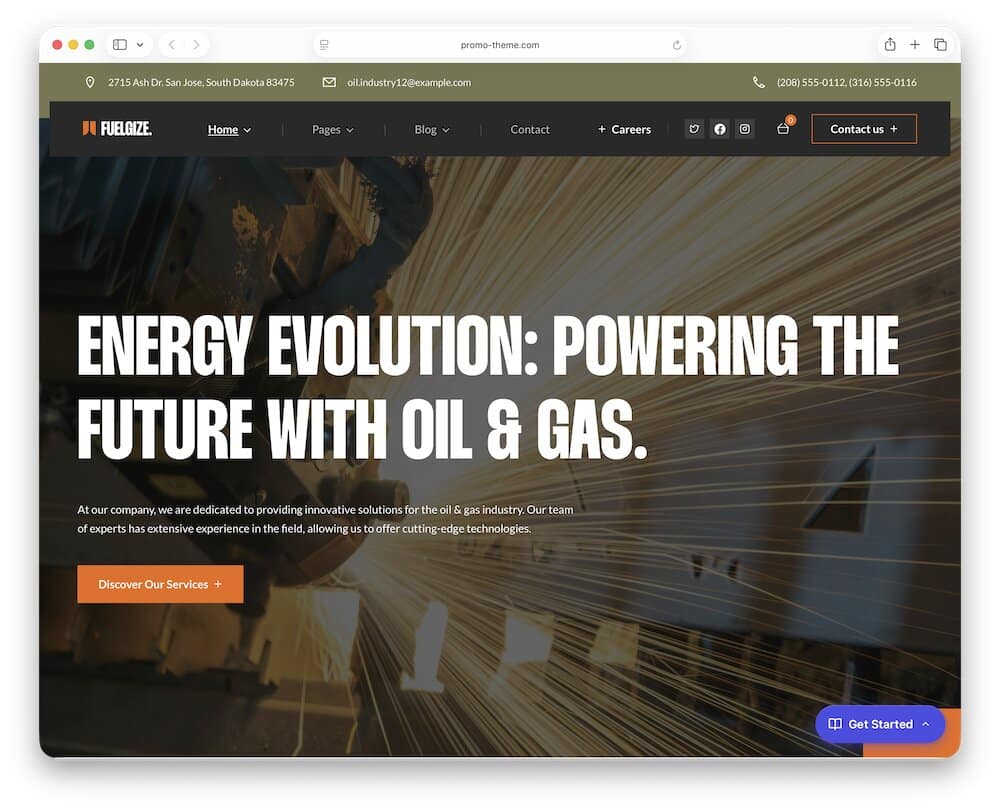
Fuelgize works well for fuel distributors, petroleum suppliers, logistics companies, and regional energy businesses.
Its two homepage options cover exploration, production, transportation, distribution, sales, research, environmental management, and workforce training.
The demo also includes separate pages for services, production, certificates, careers, news, contact details, and WooCommerce products.
This gives a fuel supplier enough structure to explain where products come from, how they are transported, which regions are served, and how commercial customers can get in touch.
5.1. Why I Like Fuelgize Theme
Fuelgize pays more attention to the middle and commercial parts of the energy chain.
Transportation, distribution, marketing, sales, production, and environmental management all receive dedicated space in the demo.
That is useful for businesses serving factories, construction companies, transport fleets, agricultural clients, and other commercial buyers—not only oil companies.
The certificate and production pages are another useful addition.
A supplier could adapt them to show fuel standards, storage capabilities, quality controls, terminal locations, delivery coverage, fleet capacity, and regulatory documents.
But I would expand the distribution content.
A real fuel supplier should clearly show delivery regions, available fuel types, minimum order requirements, storage options, emergency supply, fleet details, certifications, and a direct quote-request process.
5.2. Fuelgize Is Good For
- Fuel and petroleum distributors
- Energy transportation companies
- Regional gas suppliers
- Industrial fuel and equipment businesses
5.3. Fuelgize WordPress theme features:
- 40+ sales
- 4.4+ star ratings
- Two oil and gas homepage layouts
- Production, certificate, career, and service pages
- Price: $59
6. Oilrigpro
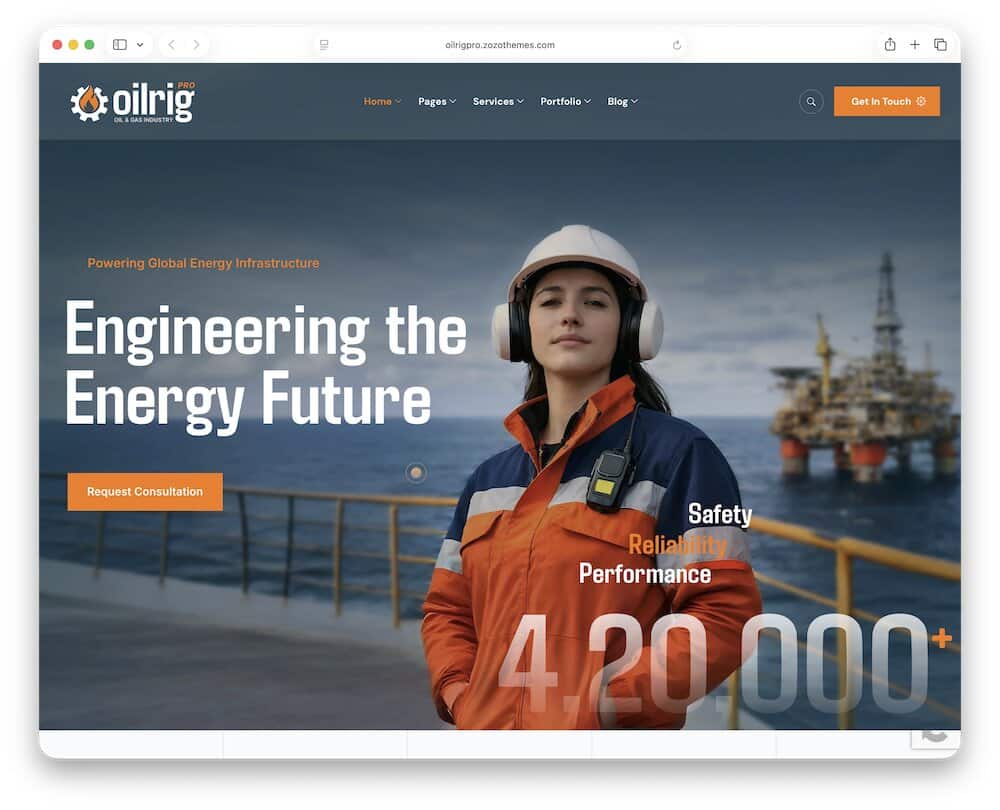
Oilrigpro is built for exploration companies, drilling contractors, oilfield service providers, engineering firms, and offshore operations.
Its demo goes deeper into fieldwork than the other themes in this roundup.
Dedicated pages cover drilling operations, field development, pipeline management, offshore oil and gas, project planning, supply chains, and integrated operations.
Five homepage layouts, several service styles, and multiple portfolio grids give you enough flexibility to separate business divisions without forcing everything onto one long corporate page.
6.1. Why I Like Oilrigpro Theme
Oilrigpro gives technical services more room to breathe.
A contractor can create separate pages for onshore drilling, offshore operations, field engineering, pipeline work, project planning, and supply-chain support.
The portfolio system includes two-, three-, and four-column grids plus individual project pages, which can be adapted into detailed case studies with location, scope, equipment, safety requirements, and results.
The demo also includes team profiles, FAQs, testimonials, company statistics, service sidebars, blog layouts, and direct consultation calls to action.
The Elementor page builder handles page editing, while Contact Form 7, WPML, RTL support, mega menus, and one-click demo import provide a solid base for an international oilfield business.
The main value of Oilrigpro is its structure, not the placeholder content.
Before going live, you should replace all demo text with your own service descriptions, project breakdowns, certifications, and operational details so the site accurately reflects your company.
It’s also worth refining the messaging so it matches your actual audience—whether that’s drilling operations, offshore support, or oilfield engineering—so each section clearly communicates what you do and who you serve.
6.2. Oilrigpro Is Good For
- Oil and gas drilling contractors
- Offshore energy companies
- Oilfield engineering firms
- Pipeline and field-service providers
6.3. Oilrigpro WordPress theme features:
- 40+ sales
- 4.5+ star ratings
- Five oil and gas homepage layouts
- Dedicated drilling, offshore, pipeline, and field services
- Price: $59
What An Oil And Gas Website Needs To Build Trust
1. Industry Positioning
Visitors should understand exactly where the company operates within the industry.
Explain whether the business focuses on exploration, drilling, production, refining, pipelines, transportation, fuel distribution, engineering, or oilfield services.
Avoid broad statements that try to cover every part of the sector.
Clear positioning makes the company easier to understand and more credible.
2. Detailed Service Pages
Each major service should have its own page.
Explain the scope of work, processes, equipment, locations, industries served, and project requirements.
A drilling service page, for example, should go far beyond a short paragraph and a stock image.
The more technical the service, the more detail the page should provide.
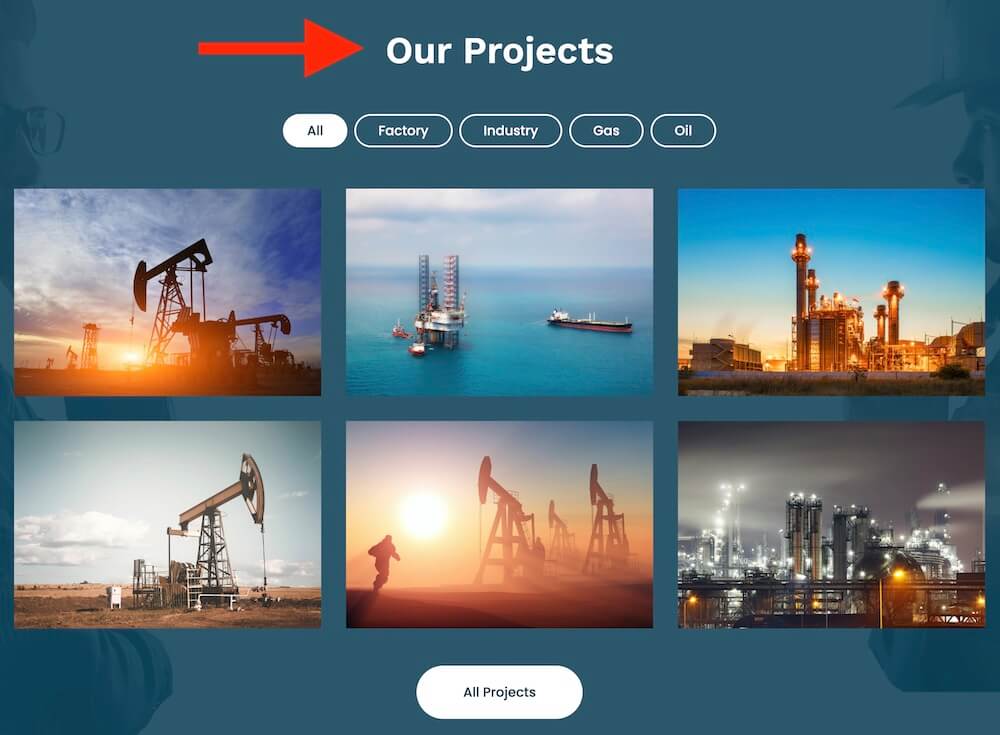
3. Strong Project & Facility Presentation
Completed work is one of the best ways to prove experience.
Create detailed project pages with the location, client sector, scope, challenges, equipment used, timeline, safety requirements, and results.
Facilities, terminals, refineries, rigs, storage sites, and operating regions should also be presented clearly where relevant.
4. Health, Safety, & Environmental Information
Safety should never be hidden inside a general About page.
Create a dedicated section for health, safety, and environmental policies, employee training, risk management, emergency procedures, and environmental commitments.
Use real company information rather than generic claims about putting safety first.
5. Certifications & Compliance
Licenses, certifications, memberships, and industry standards help support every major company claim.
Display relevant ISO certifications, quality systems, environmental standards, safety records, regulatory approvals, and professional memberships.
Where possible, include dates, issuing bodies, and downloadable documents.
6. Technical Capabilities & Equipment
Potential clients need to know whether the company can handle the work.
Show drilling systems, processing capacity, machinery, storage facilities, transport fleets, laboratory capabilities, engineering expertise, and other technical resources.
Clear specifications, equipment lists, and downloadable brochures can be more persuasive than another promotional slogan.
7. Clear Contact & Recruitment Paths
Different visitors may need different departments.
Separate general inquiries, project requests, supplier communication, investor relations, media questions, and job applications instead of sending everyone through one basic contact form.
Include office locations, operating regions, phone numbers, email addresses, and direct calls to action throughout the site.
Use separate WordPress contact forms for project inquiries, suppliers, recruitment, sales, media, and investor communication.
8. Current Company Information & Updates
An outdated website can quickly damage confidence in an active energy company.
Keep leadership details, office locations, operating regions, certifications, project information, safety records, and contact details accurate.
Regular company news can also show that the business is active and progressing.
Publish meaningful updates such as:
- New contracts and completed projects
- Facility expansions and equipment investments
- Safety milestones
- Certification renewals
- Sustainability reports
- Community initiatives
- Leadership appointments
- Recruitment announcements
Avoid filling the news section with generic industry articles that say little about the company itself. Original updates provide stronger evidence of real activity, experience, and long-term stability.
Upstream vs Midstream vs Downstream Website Needs
Oil and gas companies do not all perform the same work.
A drilling contractor, pipeline operator, and refinery may belong to the same wider industry, but each needs to present different capabilities, risks, facilities, and services online.
Your website structure should reflect where the company operates within the energy supply chain.
Upstream Oil and Gas Websites
Upstream companies focus on finding and extracting oil and gas.
Their websites should place technical expertise, field operations, equipment, and exploration capabilities at the center.
Important content includes:
- Exploration and geological services
- Onshore and offshore drilling
- Field development and production
- Drilling rigs and specialist equipment
- Operating regions and active sites
- Reservoir and engineering expertise
- Project case studies
- Health, safety, and environmental procedures
Detailed project pages are especially important.
Potential clients and partners should be able to see what the company did, where the work took place, which equipment was used, and how operational risks were managed.
Midstream Oil and Gas Websites
Midstream companies transport, store, and process oil and gas between production sites and downstream facilities.
Their websites should focus on infrastructure, reliability, geographic coverage, and operational capacity.
Important content includes:
- Pipeline networks
- Transportation and logistics
- Storage terminals and tank facilities
- Gas processing
- Shipping and fleet capabilities
- Operating regions and route maps
- Capacity and throughput information
- Emergency response and maintenance procedures
Maps can be particularly valuable for midstream businesses.
They help visitors understand pipeline routes, terminals, storage sites, ports, and the regions a company serves.
The website should also make certifications, maintenance standards, environmental monitoring, and supply reliability easy to find.
Downstream Oil and Gas Websites
Downstream companies turn raw materials into usable products and bring them closer to commercial or retail customers.
Their websites need to explain processing capabilities, product ranges, quality standards, and distribution.
Important content includes:
- Refining and petrochemical operations
- Fuel processing and production
- Product specifications
- Quality-control procedures
- Chemical and laboratory capabilities
- Fuel distribution and wholesale supply
- Storage and delivery options
- Commercial inquiry and quote forms
A refinery may need detailed facility pages covering production capacity, technology, certifications, and environmental controls.
A fuel distributor, meanwhile, should make product availability, delivery regions, order requirements, and commercial contact details immediately clear.
Essential Pages for an Oil & Gas Company Website
1. Home Page
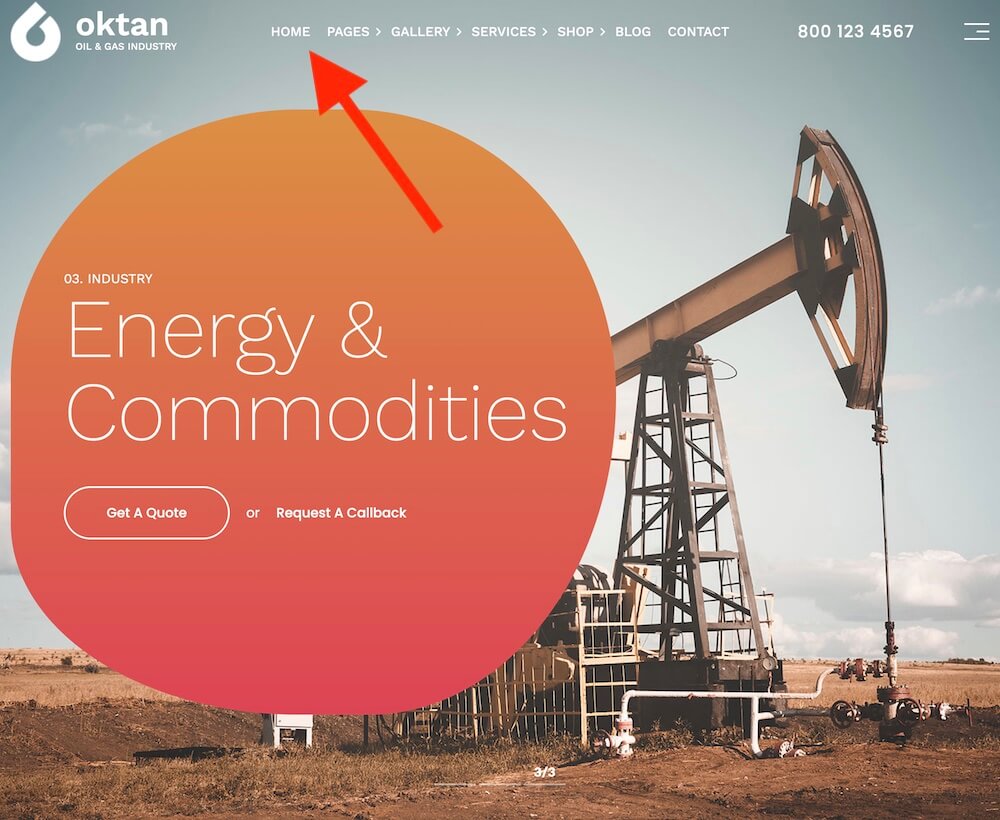
The homepage should explain what the company does, where it operates, and which part of the industry it serves.
Include:
- Clear business positioning
- Main services or divisions
- Key projects or facilities
- Safety and environmental priorities
- Certifications or experience
- Strong contact or quote buttons
Avoid filling the first screen with vague claims. Visitors should understand the company within seconds.
2. About the Company
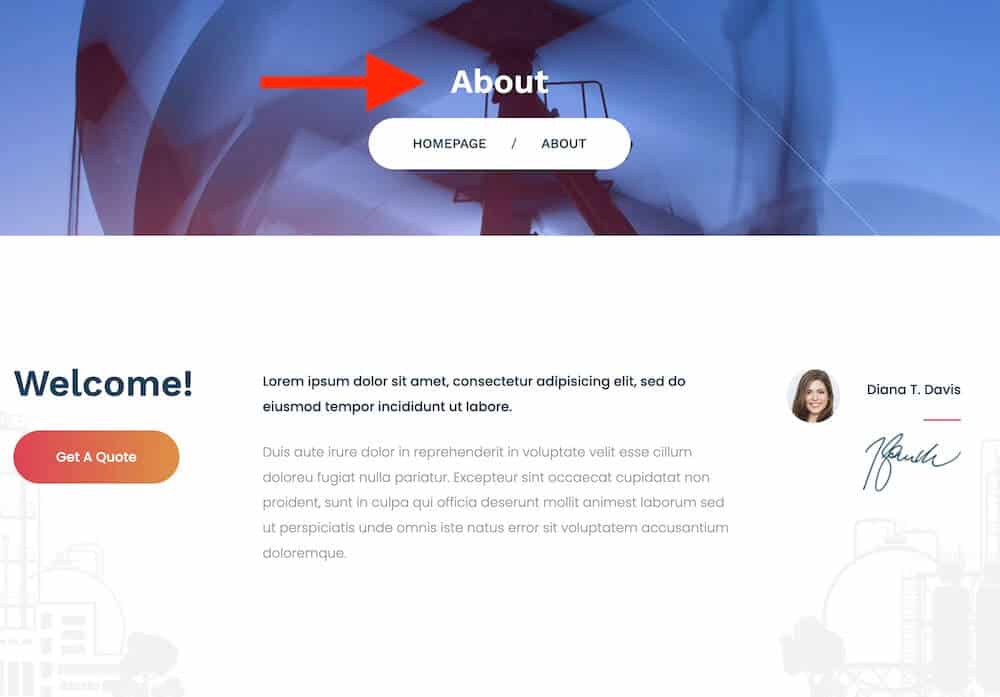
Use the About page to present the company’s history, leadership, values, experience, and operational scale.
This is also the right place to explain ownership, business divisions, geographic reach, and long-term goals.
Include real information rather than relying only on mission statements.
3. Services
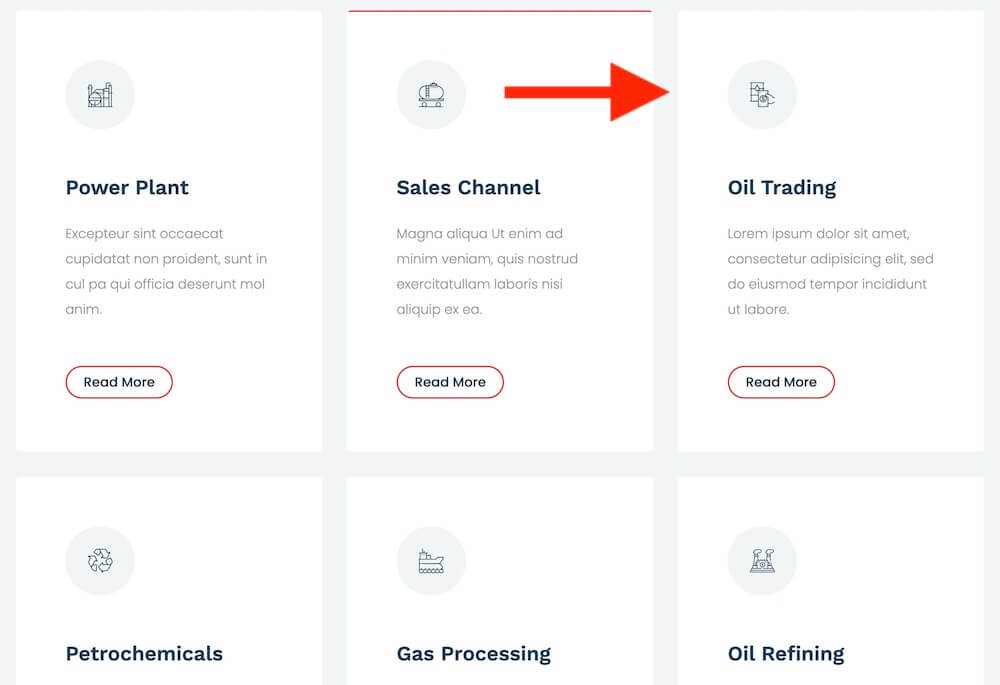
Create a main services page with links to separate pages for each major capability.
Depending on the business, this may include:
- Exploration
- Drilling
- Engineering
- Pipeline services
- Refining
- Fuel distribution
- Equipment supply
- Environmental management
Each service page should explain the process, locations, equipment, client types, and technical scope.
4. Projects and Case Studies
Project pages provide practical evidence of experience.
Show completed and active work with details such as:
- Project location
- Client sector
- Scope of work
- Equipment used
- Challenges
- Safety requirements
- Timeline
- Results
Use real images whenever possible. Generic refinery photography cannot replace a strong case study.
5. Facilities and Operating Locations
This page should show where the company works and what each location does.
Include offices, terminals, refineries, plants, rigs, warehouses, laboratories, storage facilities, and service regions where relevant.
Maps, capacity information, contact details, and facility-specific capabilities can help visitors understand the company’s reach.
6. Equipment and Technical Capabilities
Clients need proof that the company has the people and resources to complete the work.
Present drilling rigs, transport fleets, machinery, processing systems, laboratories, storage capacity, engineering tools, and specialist technology.
Add specifications, brochures, or downloadable technical documents where useful.
7. Health, Safety, and Environment
Give safety and environmental performance its own page.
Cover:
- Safety policies
- Employee training
- Risk management
- Emergency response
- Environmental monitoring
- Incident prevention
- Community protection
- Sustainability targets
Use verified company information and current data. Avoid broad claims without supporting details.
8. Certifications and Compliance
Create a clear place for licenses, accreditations, quality systems, regulatory approvals, and industry memberships.
Include the issuing organization, certification number, date, and expiry information where appropriate.
Downloadable certificates can add another layer of transparency.
You can present certificates, safety reports, technical brochures, and annual publications with a WordPress PDF viewer plugin.
9. Sustainability and Responsibility
This page should explain how the company manages emissions, water, waste, land use, energy efficiency, and community impact.
Larger companies may also publish annual sustainability or ESG reports.
Keep the language specific. Visitors are more likely to trust measurable actions than general promises about protecting the planet.
10. Investor and Corporate Information
Public companies and larger energy groups may need a dedicated investor section.
It can include:
- Annual reports
- Financial results
- Presentations
- Governance documents
- Leadership information
- Shareholder updates
- Regulatory announcements
Keep these files organized by year and make them easy to download.
11. Careers
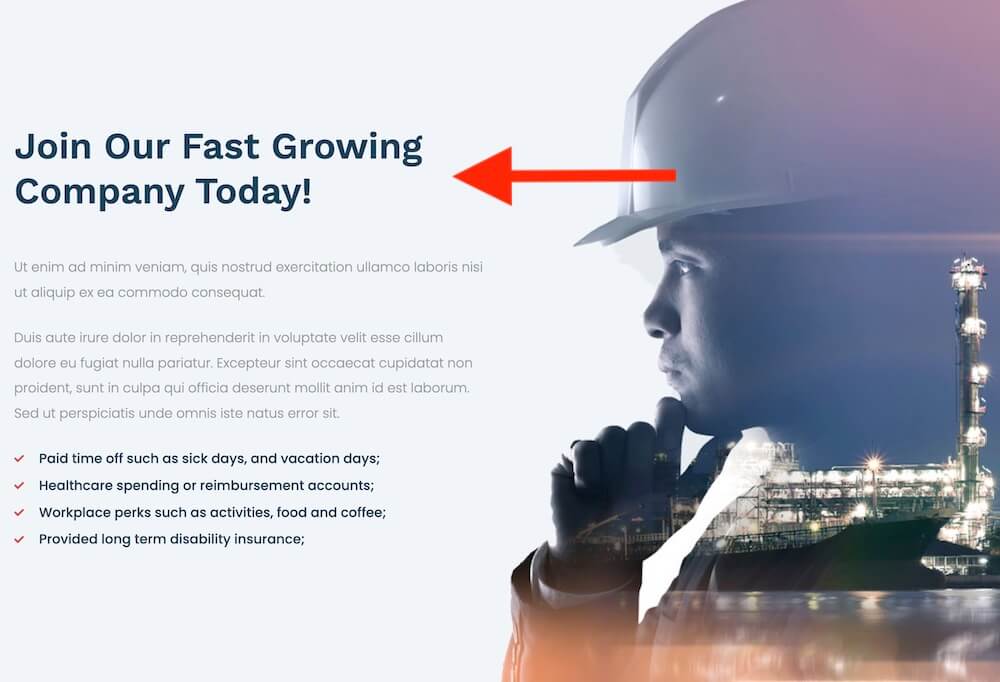
Oil and gas businesses often recruit for technical, engineering, field, safety, logistics, and corporate roles.
The careers page should include:
- Current vacancies
- Job locations
- Role requirements
- Company culture
- Training opportunities
- Graduate programs
- Application instructions
Make it clear how candidates should apply and warn them about recruitment scams if necessary.
Larger companies can use a WordPress job board plugin to organize vacancies by department, location, contract type, and experience level.
12. News and Updates
Use the news section for real company developments.
Publish project awards, contract announcements, facility upgrades, safety milestones, certification renewals, leadership changes, community work, and recruitment updates.
A regularly maintained news page shows that the business is active.
13. Contact and Locations
Do not send every visitor to one basic form.
Provide separate contact options for:
- Project inquiries
- Sales and fuel orders
- Suppliers
- Careers
- Investor relations
- Media
- General questions
Include office addresses, operating hours, phone numbers, email addresses, maps, and emergency contacts where appropriate.
Conclusion: Pick The Ideal Oil & Gas WordPress Theme
The right choice depends on where your company sits within the oil and gas industry.
OilDrop is my top overall recommendation because it provides a balanced structure for services, company information, technical content, news, and business inquiries.
Oktan is the stronger option for an established industrial group with several divisions.
Petroleum fits refineries, petrochemical plants, and processing companies that need more detailed project presentation.
Gola is the best choice for a cleaner, more modern corporate image.
Fuelgize suits fuel suppliers, distributors, and logistics businesses, while Oilrigpro is built more directly around drilling, offshore work, pipelines, and field services.
Before purchasing, test the full demo carefully.
Open the service pages. Review the project layouts.
Check how certifications, locations, equipment, documents, and safety information can be presented. Then test the menu and inquiry forms on a phone.
The ideal oil and gas WordPress theme should not only look industrial.
It should help visitors understand your capabilities, verify your credibility, and reach the correct department without unnecessary searching.
FAQs About Oil & Gas WordPress Themes
What is the best WordPress theme for an oil and gas company?
OilDrop is my top overall choice because it offers a balanced structure for services, company information, technical content, news, WooCommerce, and business inquiries.
Can I use WordPress for an oil and gas company website?
Yes. WordPress can support service pages, project portfolios, facility information, safety reports, certifications, recruitment, investor content, and contact forms.
Which theme is best for an oil refinery?
Petroleum is the strongest option for refineries, petrochemical companies, processing plants, and chemical manufacturers.
Can I display oil and gas projects with WordPress?
Yes. Most industrial themes include portfolio or project layouts. Use them to show the location, scope, equipment, timeline, safety requirements, challenges, and results of each project.
Can an oil and gas website support multiple locations?
Yes. You can create separate pages for offices, terminals, refineries, storage facilities, rigs, plants, and operating regions.
Can I publish safety reports and technical documents?
Yes. WordPress lets you upload certificates, brochures, annual reports, technical specifications, sustainability documents, and safety publications.
Are oil and gas WordPress themes mobile-friendly?
Modern themes are responsive, but you should still test the demo carefully on a phone.
Can I use WooCommerce to sell industrial equipment?
Yes. WooCommerce can be used for equipment, spare parts, chemicals, tools, technical downloads, or catalog-style product presentation.
Do oil and gas websites need WooCommerce?
Not always. A service-based company may only need project, capability, safety, recruitment, and inquiry pages. WooCommerce is useful when the business sells products, equipment, parts, or downloadable resources.
Can I create a multilingual oil and gas website?
Yes. Many of the themes in this roundup support WPML, translation plugins, and RTL languages.