
WordPress affiliate plugins are a great starting point for running an affiliate program directly from your website.
Probably the easiest solution out there.
They are simple to set up, affordable, and packed with everything you need to track referrals, manage commissions, and keep affiliates organized.
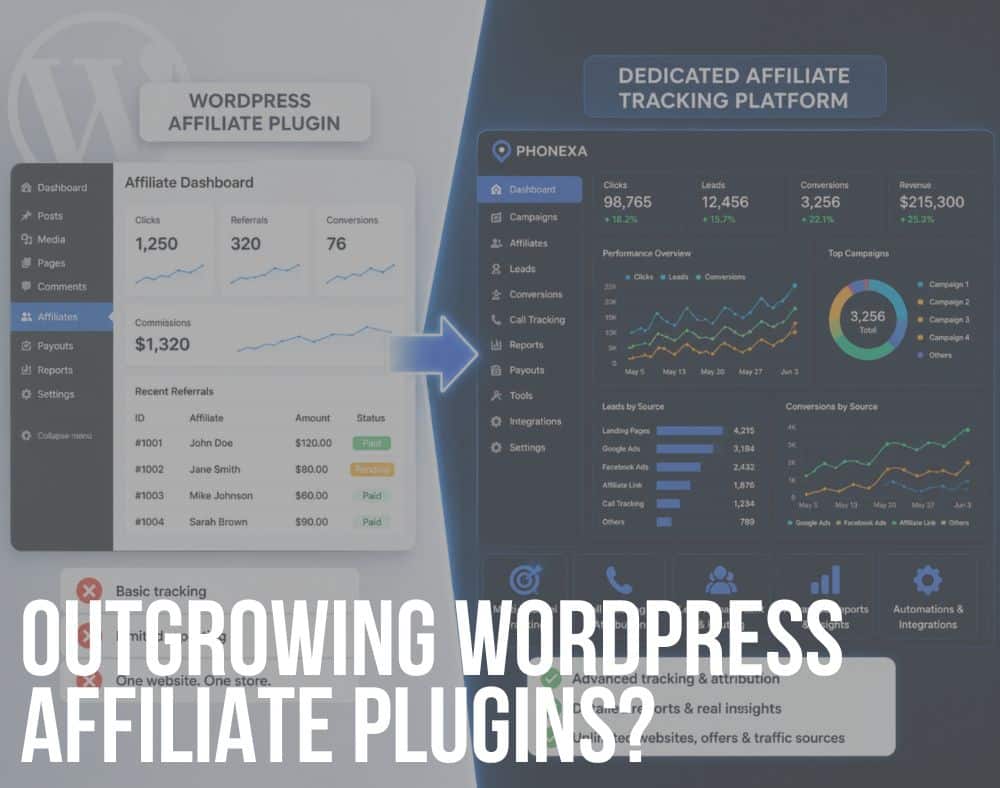
But as your program grows, things can (and likely will) get more complicated.

You may start working with more publishers, tracking leads instead of just sales, managing multiple campaigns, or needing better attribution across different channels.
At that point, a standard WordPress plugin can start showing its limits.
That does not mean every growing business needs to switch to a dedicated affiliate tracking platform.
In this guide, I’ll show you when a WordPress affiliate plugin is still perfectly enough, the signs that you may be outgrowing it, and when moving to a more advanced solution such as Phonexa could be worth considering.
Let’s do this.
This post covers:
- What WordPress Affiliate Plugins Do Well
- When A WordPress Affiliate Plugin Is Still Enough
- 8 Signs You May Be Outgrowing Your WordPress Affiliate Plugin
- WordPress Affiliate Plugins Vs Dedicated Affiliate Tracking Platforms
- What Should You Look For When Moving Beyond A WordPress Plugin?
- Where Phonexa Fits Into This Picture
- Who Should Consider A Platform Like Phonexa?
- Who Probably Doesn’t Need To Move Beyond WordPress Yet?
- Common Mistakes When Upgrading Affiliate Tracking
- Conclusion: Should You Move Beyond A WordPress Affiliate Plugin?
What WordPress Affiliate Plugins Do Well
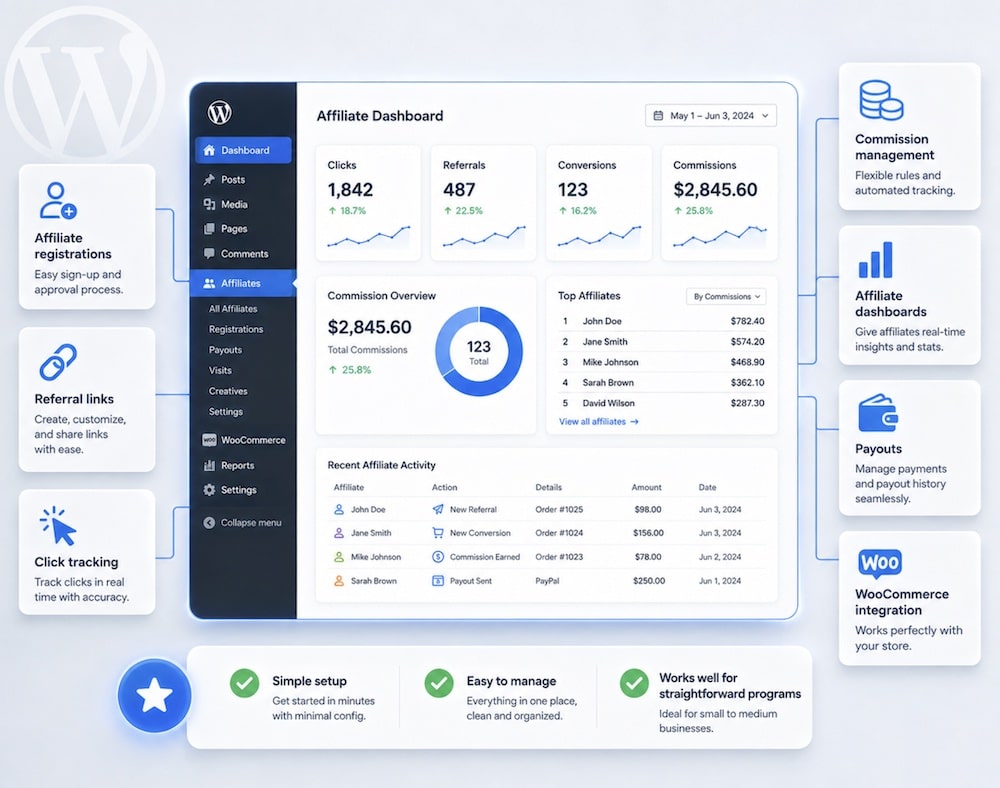
WordPress affiliate plugins are a strong choice for small to mid-sized programs because they keep everything simple and close to your website.
For many businesses, that is exactly what you want.
There are plenty of capable affiliate marketing plugins that can take care of your needs directly inside WordPress.
A good affiliate plugin usually handles:
- Affiliate registrations
- Unique referral links
- Click and conversion tracking
- Commission calculations
- Coupon tracking
- Affiliate dashboards
- Basic performance reports
- WooCommerce integrations
- Payout management
The biggest advantage is convenience.
You do not need to add a completely separate platform just to manage a straightforward affiliate program.
Everything stays connected to WordPress, which makes setup, maintenance, and day-to-day management easier.
Even for someone unfamiliar with running an affiliate program.
For stores and businesses with a simple referral flow, this can work extremely well for years.
If affiliates send visitors to your site, those visitors make a purchase, and you mainly need to track who earned the commission, a WordPress plugin can often do the job without adding unnecessary complexity.
When A WordPress Affiliate Plugin Is Still Enough
More advanced software is not automatically better.
If your current WordPress affiliate plugin already handles your program reliably, there may be no reason to replace it.
A plugin is usually still enough when:
- You manage one website or online store.
- Most conversions happen directly on your site.
- You mainly need click-to-sale attribution.
- Your affiliate program has a manageable number of partners.
- Your commission structure is fairly simple.
- Basic reports give you the information you need.
- You do not need to route or sell leads.
- Phone calls are not an important conversion channel.
- You are not managing complex campaigns across multiple brands or traffic sources.
This is especially true for many WooCommerce stores, membership sites, digital product businesses, and smaller SaaS companies.
If the basic flow is still affiliate link → visitor → conversion → commission, a dedicated tracking platform may only add extra cost and complexity.
The time to upgrade is when your affiliate program starts asking your WordPress plugin to do jobs it was never really built for.
8 Signs You May Be Outgrowing Your WordPress Affiliate Plugin
There is rarely one exact moment when a WP affiliate plugin suddenly becomes too limited.
Instead, you usually start noticing small problems as your affiliate operation becomes more complex.
Here are my eight signs that it may be time to look at a dedicated tracking platform.
1. You Need To Track More Than Clicks And Online Sales
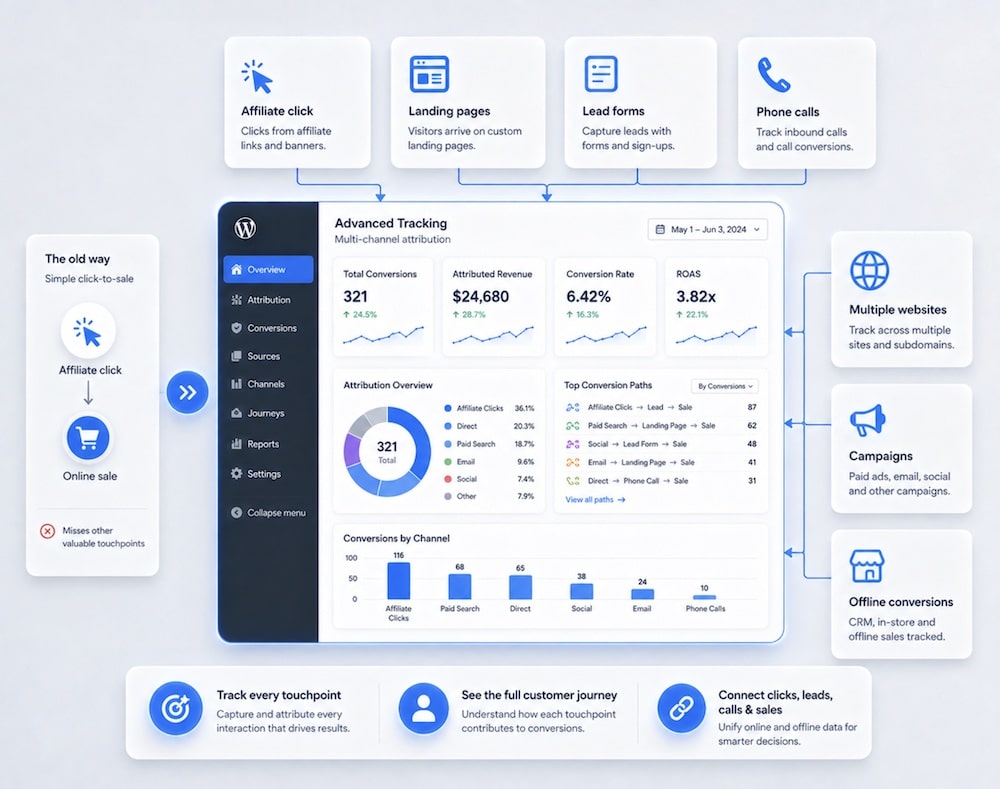
Traditional affiliate tracking works well when someone clicks a referral link and completes a purchase on the same website.
But customer journeys are not always that simple.
Conversions might also come through:
- Lead forms
- Phone calls
- Landing pages
- Multiple websites
- Different campaigns
- Offline sales
Once several channels contribute to conversions, connecting each result to the correct affiliate or campaign becomes much harder.
This is where more advanced affiliate tracking platforms, such as Phonexa, can provide a broader view of performance across different acquisition channels.
2. You’re Managing A Large Number Of Affiliates And Campaigns
Managing 20 affiliates is very different from managing hundreds or thousands of publishers across numerous offers.
As things grow, it becomes important to understand whether you need to run an affiliate program or an affiliate network, since each setup requires a very different level of tracking and management.
You may need greater control over:
- Offers
- Campaigns
- Traffic sources
- Affiliate permissions
- Commission structures
- Performance reporting
A WordPress dashboard can become increasingly difficult to manage when affiliate marketing turns into a major acquisition channel rather than a small referral program.
3. You Need More Detailed Attribution
Basic attribution tells you which affiliate generated a conversion.
A larger performance marketing operation may need much more context.
For example:
- Which campaign generated the click?
- Which landing page converted best?
- Which offer produced the sale?
- Which traffic source brought the visitor?
- Which location performed better?
- What happened before the final conversion?
The more money you invest in affiliate traffic, the more valuable this additional information becomes.
4. You Need To Track And Distribute Leads
Not every affiliate program ends with an eCommerce purchase.
Lead-generation businesses may receive leads from multiple publishers and then need to validate, route, distribute, or sell them.
That can involve:
- Checking duplicate leads
- Validating lead information
- Matching leads with buyers
- Routing leads based on specific criteria
- Tracking accepted and rejected leads
- Measuring publisher quality
- Calculating revenue per lead
This goes well beyond standard affiliate commission tracking.
Note: If capturing more leads is still your main goal, these WordPress lead generation plugins can help before you move to a more advanced tracking setup.
5. Phone Calls Are An Important Conversion Channel
For some businesses, the affiliate click is only the beginning.
Customers might research the service online and then call before purchasing.
This is common in industries such as insurance, finance, legal services, home services, and other high-value service businesses.
If phone calls generate significant revenue, you may need to know exactly which publisher, campaign, or traffic source generated each call.
Most traditional affiliate plugins are focused primarily on website-based conversions, so call attribution may require additional tools or a broader tracking platform.
6. You Need Deeper Real-Time Reporting
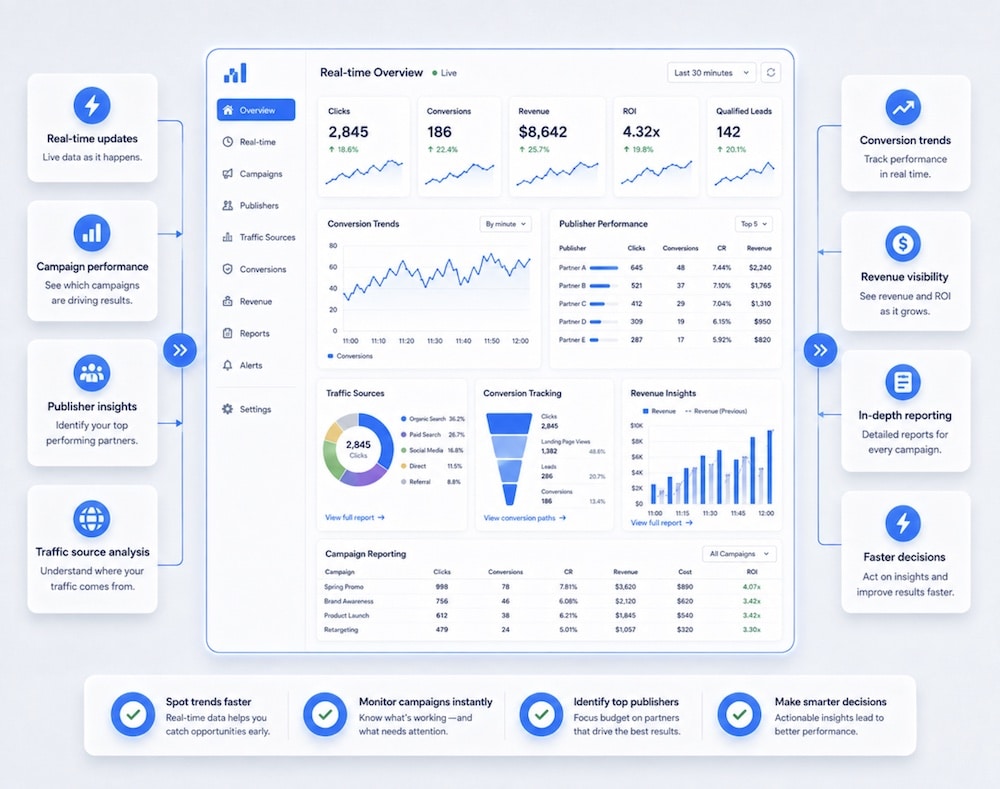
Basic reports can be perfectly adequate when your affiliate program is small.
But larger operations may want to monitor much more than total clicks and commissions.
That could include:
- Conversion rates
- Revenue
- Publisher performance
- Campaign performance
- Traffic sources
- Lead quality
- ROI
- Conversion trends
Having this information available quickly makes it easier to spot strong campaigns and identify problems before they become expensive.
7. Fraud And Traffic Quality Are Becoming More Important
More traffic also means more opportunities for low-quality or suspicious activity.
You may start encountering:
- Duplicate leads
- Unusual click patterns
- Invalid traffic
- Poor-quality publishers
- Suspicious conversion activity
When affiliate marketing represents a meaningful portion of your revenue or marketing spend, monitoring traffic quality becomes super important.
You do not want to discover after paying commissions that a large chunk of your traffic was worthless.
8. Affiliate Marketing Has Become Core Business Infrastructure
This is probably the clearest sign of all.
If your affiliate program has grown from a small marketing experiment into one of your primary customer acquisition channels, you may want more dedicated infrastructure behind it.
That can include:
- Multiple websites
- Large publisher networks
- Advanced integrations
- Different conversion channels
- Dedicated reporting
- Larger datasets
- More user roles
- More complex attribution
At this point, the question is no longer whether your WordPress plugin technically works.
It is whether it still gives your business enough control, visibility, and room to grow.
WordPress Affiliate Plugins Vs Dedicated Affiliate Tracking Platforms
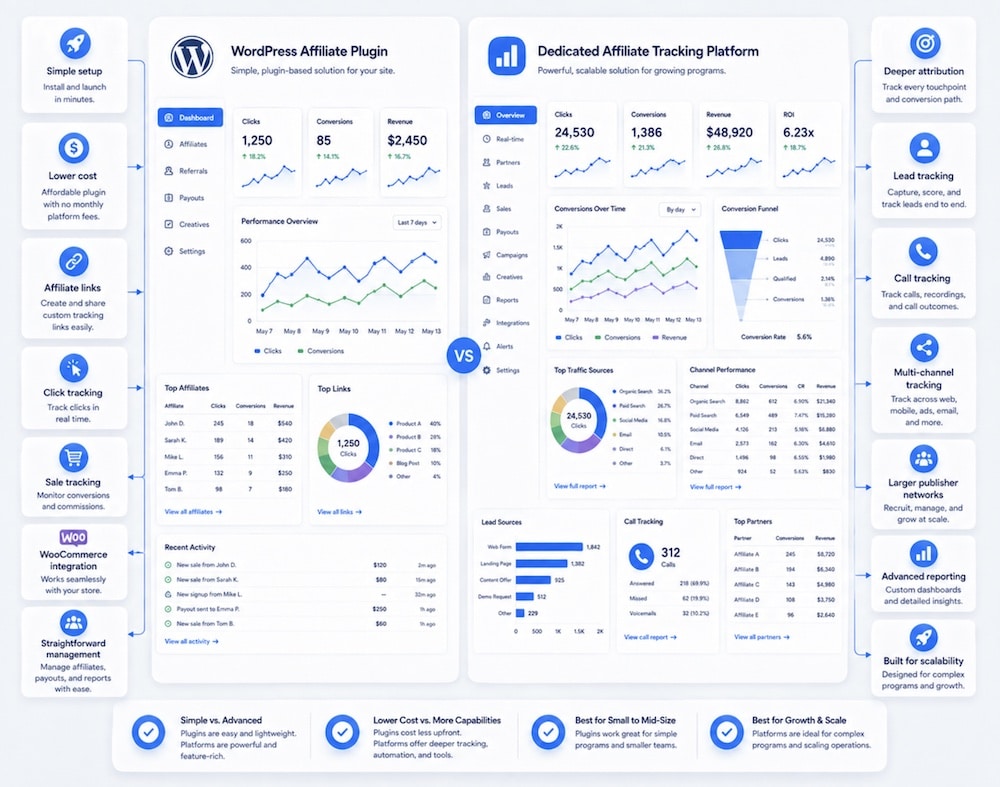
Both options can work well, but they are built for different levels of complexity.
WordPress affiliate plugins are usually best for businesses that want to manage a straightforward program directly from their website.
Dedicated platforms are better suited to larger operations that need broader tracking, more reporting, and support for multiple channels.
Here is a quick comparison:
| Feature | WordPress Affiliate Plugin | Dedicated Affiliate Tracking Platform |
|---|---|---|
| Setup | Usually quick and simple | More involved |
| Cost | Lower | Higher |
| Affiliate links | Yes | Yes |
| Click tracking | Yes | Yes |
| Sale tracking | Yes | Yes |
| Commission management | Yes | Yes |
| WooCommerce integration | Often built in | Usually handled through integrations |
| Advanced attribution | Limited or varies | Typically stronger |
| Lead tracking | Usually limited | Often available |
| Lead distribution | Rare | Available on some platforms |
| Call tracking | Usually requires extra tools | Available on some platforms |
| Multi-channel tracking | Limited | More advanced |
| Real-time reporting | Basic to moderate | Often much deeper |
| Large publisher networks | Possible | Better suited |
| Best for | Small to mid-sized programs | Complex or growing operations |
The biggest difference is not simply the number of features.
It is how much of your affiliate operation happens outside WordPress.
If your program mainly tracks referrals and purchases on one site, a plugin can remain the better option.
It is cheaper, easier to manage, and often does everything you actually need.
But once you start handling leads, phone calls, multiple campaigns, larger publisher networks, and more detailed attribution, a dedicated platform can provide much more control.
What Should You Look For When Moving Beyond A WordPress Plugin?
- Reliable click and conversion tracking: Accurate attribution should be the foundation of the platform.
- Real-time reporting: Useful for monitoring campaigns, publishers, conversions, revenue, and performance changes quickly.
- Affiliate and publisher management: Make sure you can organize partners, offers, permissions, and commission structures without creating extra admin work.
- Advanced attribution: Helpful when conversions involve multiple touchpoints, landing pages, campaigns, or traffic sources.
- Lead tracking and distribution: Important for businesses that collect, validate, route, or sell leads.
- Call tracking: A major advantage if phone calls contribute heavily to conversions.
- Fraud and traffic-quality tools: Handy for spotting suspicious activity, duplicate leads, and low-quality traffic.
- Flexible integrations: Check compatibility with your CRM, ecommerce platform, forms, analytics tools, payment systems, and other software.
- API access: Particularly valuable if you need custom integrations or want to connect the platform to your internal systems.
- Custom reporting: Look for reports that match the metrics your team actually uses instead of forcing you into a fixed dashboard.
- Scalability: The platform should handle more traffic, affiliates, campaigns, and data without forcing another migration later.
- Security and compliance features: Especially important if you handle large amounts of customer or lead data.
- Good onboarding and support: More advanced platforms can have a steeper learning curve, so reliable assistance can save a lot of frustration.
When comparing affiliate marketing software, look beyond the feature list and focus on the tools that solve your current limitations.
Where Phonexa Fits Into This Picture
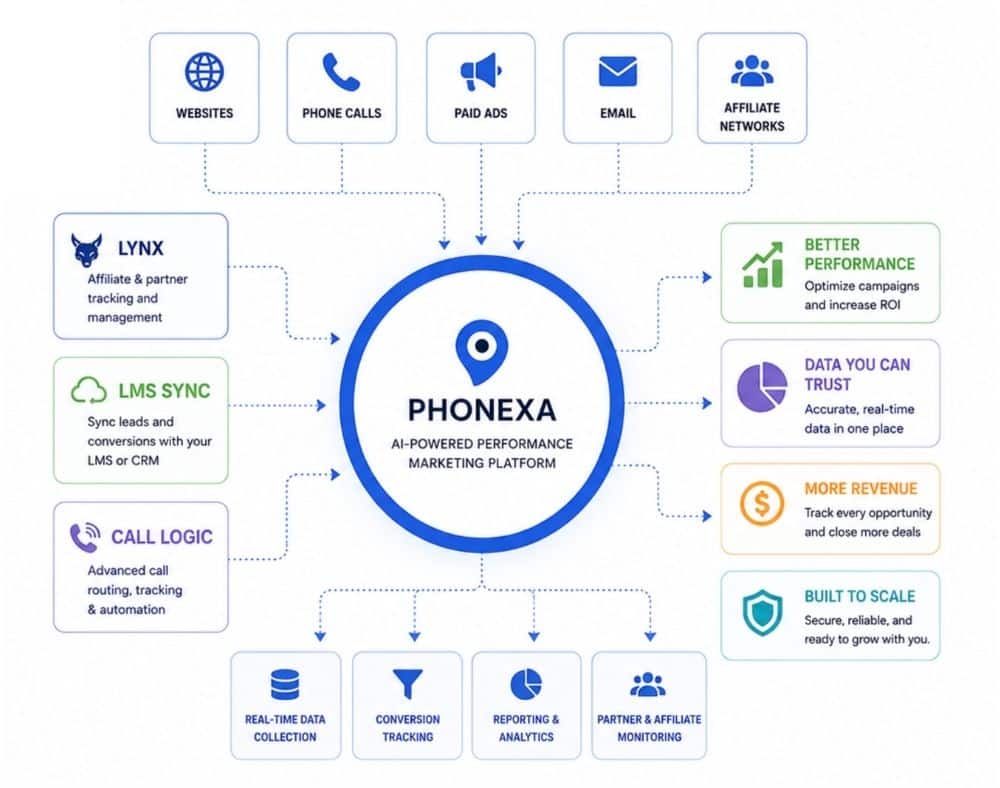
Phonexa becomes relevant when affiliate tracking is only one part of a much larger performance marketing setup.
Instead of focusing on a single WordPress-based referral program, its platform connects affiliate tracking with lead management, call tracking, distribution, reporting, and other marketing tools.
Its affiliate-focused product, Lynx, is built for tracking offers and traffic in real time.
It can monitor clicks, conversions, affiliate performance, campaign ROI, and attribution from one dashboard.
Phonexa also positions it specifically for affiliate networks and performance marketers.
But the bigger advantage is how Lynx connects with the rest of the Phonexa suite.
- LMS Sync handles lead tracking, validation, routing, distribution, and analytics. It is particularly useful for businesses that work with publishers, lead buyers, or complex lead-generation campaigns.
- Call Logic adds inbound call tracking and distribution, including attribution, routing, analytics, and support for pay-per-call and affiliate campaigns.
- Lynx keeps the affiliate side organized by tracking offers, clicks, conversions, traffic sources, and partner performance.
That distinction is important.
Moving from a WordPress affiliate plugin to Phonexa is not simply about replacing one affiliate dashboard with a more advanced one.
It is about moving toward a broader system that can connect clicks, leads, calls, publishers, buyers, and revenue.
For a small affiliate program, that level of functionality may be unnecessary.
But for an affiliate network, lead-generation company, or performance marketing business working across several channels, having those pieces under one platform can become much more valuable.
Who Should Consider A Platform Like Phonexa?
It may be worth considering if you are:
- Running an affiliate network: Especially if you manage many publishers, offers, campaigns, and commission structures.
- Operating a lead-generation business: Useful when you need to track, validate, route, and distribute leads.
- Managing pay-per-call campaigns: A strong fit when phone calls are an important part of your conversion flow.
- Running a performance marketing agency: Helpful when you need deeper reporting across multiple clients, campaigns, and traffic sources.
- Working with multiple publishers or lead buyers: Useful when you need better visibility into where leads come from and where they are sent.
- Tracking conversions across several channels: Especially when clicks, forms, calls, and other touchpoints all contribute to revenue.
- Outgrowing basic WordPress reporting: A better option when simple affiliate dashboards no longer provide enough detail.
- Managing complex attribution: Helpful when you need to connect conversions to specific offers, campaigns, publishers, or traffic sources.
- Scaling affiliate marketing into a major acquisition channel: Once affiliate activity becomes core business infrastructure, dedicated tracking can provide more control and flexibility.
Who Probably Doesn’t Need To Move Beyond WordPress Yet?
You can probably stick with your WordPress affiliate plugin if:
- You run a small affiliate program: A few dozen active partners usually do not require enterprise-level infrastructure.
- Most conversions happen directly on your website: If the journey is still mainly referral click → purchase → commission, WordPress can handle it well.
- You manage one website or store: Things stay much simpler when there are no multiple brands, domains, or complex campaigns involved.
- Your commission structure is straightforward: Basic percentage or fixed commissions are easy for most affiliate plugins to manage.
- You do not need lead routing or distribution: This is one of the clearest signs that a more advanced platform may be unnecessary.
- Phone calls are not a major conversion channel: If nearly everything happens online, dedicated call tracking adds little value.
- Your current reports are enough: There is no need to pay for deeper analytics if you are already getting the data you need.
- Your existing plugin is reliable: If tracking is accurate and affiliates are happy, replacing it could create more work than benefit.
- Your budget is still limited: Advanced platforms usually cost more and may also require extra setup, integrations, and training.
Common Mistakes When Upgrading Affiliate Tracking
Watch out for these common mistakes:
- Upgrading just because a platform has more features: More tools do not automatically mean a better setup. Focus on what your business actually needs.
- Not defining your requirements first: Know exactly which limitations you are trying to fix before comparing platforms.
- Ignoring migration complexity: Moving tracking systems can affect links, attribution, reporting, integrations, and affiliate workflows.
- Forgetting about historical data: Make sure important click, conversion, commission, and affiliate records can be preserved or exported.
- Skipping proper testing: Always verify that clicks, conversions, leads, and commissions are being tracked correctly before fully switching.
- Overlooking integrations: Check that the new platform works smoothly with your CRM, ecommerce setup, forms, analytics tools, and payment systems.
- Making things harder for affiliates: New dashboards, links, or reporting methods should not create unnecessary friction for your partners.
- Underestimating training and onboarding: Advanced platforms often require more setup and learning than a typical WordPress plugin.
- Paying for features you will never use: Enterprise functionality can get expensive quickly if most of it sits untouched.
- Choosing a platform that is too complex for your current stage: The best upgrade is one that solves today’s problems without creating ten new ones.
A successful upgrade should make your affiliate operation easier to manage, more accurate, and more scalable.
If it only adds cost and complexity, it probably was not the right move.
Conclusion: Should You Move Beyond A WordPress Affiliate Plugin?
For many businesses, a WordPress affiliate plugin is still more than enough.
If you mainly track referral links, online sales, and commissions on one website, there is little reason to complicate the setup.
But once your affiliate program grows into a larger performance marketing operation, the limitations can become more noticeable.
That is especially true if you need better attribution, lead routing, call tracking, deeper reporting, or support for many publishers and campaigns.
In that case, a dedicated platform like Phonexa can be worth considering.
The key is not to upgrade just because you can.
Move beyond WordPress when your current setup starts holding your business back.