
The best recycling WordPress themes help green businesses explain what they recycle, how the process works, and why customers should trust them.
A recycling website needs to go beyond looking eco-friendly.
It should clearly show accepted materials, collection options, drop-off locations, environmental results, certifications, and the next step for visitors.
I picked the themes below for their recycling-focused service pages, project layouts, impact sections, contact forms, location features, and easy customization.

They can work for recycling companies, e-waste businesses, environmental organizations, circular economy projects, sustainability consultants, and community recycling programs.
Businesses that focus more on solar, wind, and clean power can also explore these renewable energy WordPress themes
Let’s check the best recycling WordPress themes I’d use for a green business.
This post covers:
- Best Recycling WordPress Themes Compared
- Best Recycling WordPress Themes
- What A Recycling Website Needs To Build Trust
- How To Choose A Recycling WordPress Theme
- Conclusion: Which Recycling WordPress Theme Is Best?
- FAQs About Recycling WordPress Themes
Best Recycling WordPress Themes Compared
| Theme | Best For | Main Strength | Builder | My Take |
|---|---|---|---|---|
| Ecologist | Environmental organizations | Campaigns, donations, events, and projects | WPBakery | Best for nonprofits |
| Recyo | Commercial recycling companies | Exact recycling niche fit | Elementor | Best overall |
| GoGreen | E-waste and eco-technology businesses | Technical recycling services | Elementor | Best for e-waste |
| Ecobin | Modern green businesses | Clean design and strong inner pages | Elementor | Best modern option |
| Wastewise | Recycling collection services | Pickup, service, and collection layouts | Elementor | Best for collections |
Best Recycling WordPress Themes
1. Ecologist
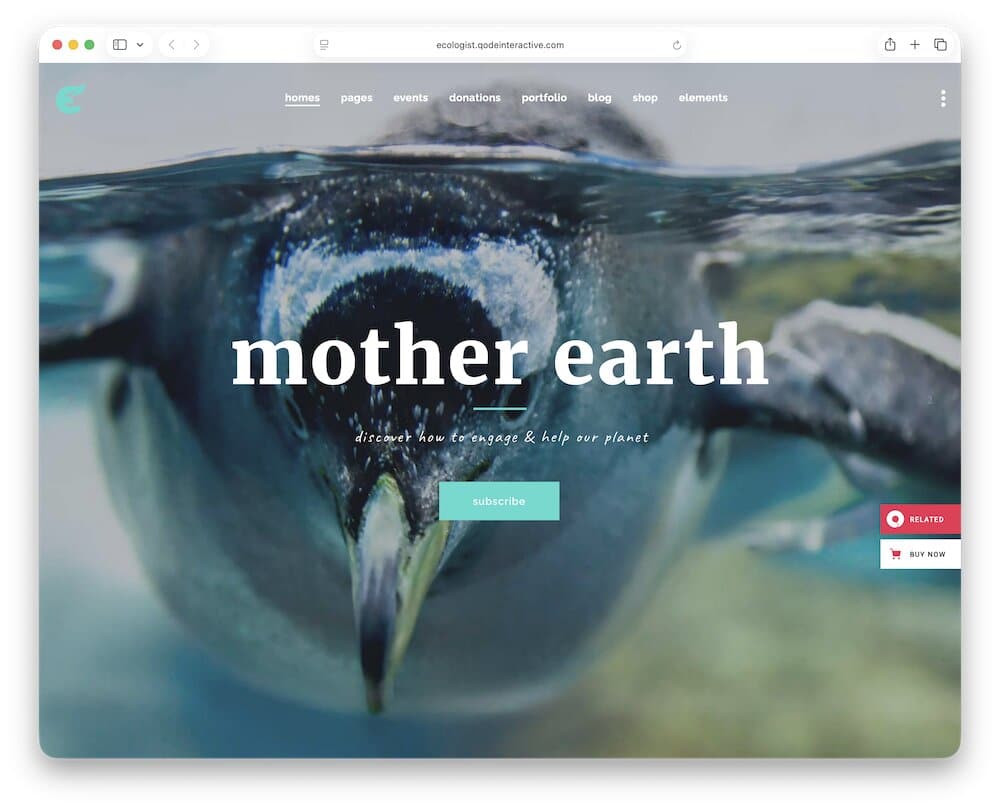
Ecologist is a flexible choice for recycling programs, environmental nonprofits, sustainability campaigns, and community organizations that need more than a basic service website.
The theme includes nine homepage layouts covering areas such as environmental protection, activism, wind power, global warming, rainforest projects, wildlife, blogging, and online selling.
You also get pages for services, teams, FAQs, events, donations, portfolios, blogs, and WooCommerce.
Its biggest strength is the way it handles campaigns and public involvement.
The demo includes donation listings, individual fundraising pages, event layouts, project-style portfolios, newsletter sections, impact counters, testimonials, maps, and calls to action.
That gives organizations several ways to explain their work and encourage visitors to donate, volunteer, attend an event, or support a campaign.
You can expand the fundraising setup further with one of these free WordPress donation plugins.
Moreover, I’d use the portfolio layouts to showcase recycling initiatives, clean-up projects, education programs, facility improvements, or measurable environmental results.
The counters, progress bars, charts, and timelines are also useful for presenting recycling rates, landfill diversion, recovered materials, or campaign progress.
Ecologist uses WPBakery rather than Elementor. It also includes Slider Revolution, one-click demo import, Give donation compatibility, WooCommerce support, WPML compatibility, Contact Form 7, and customizable Google Maps.
Ecologist is a fire theme that can transform your online presence into something special.
1.1. Why I Like Ecologist Theme
Ecologist covers the broader side of environmental work better than the other themes in this roundup.
It gives you strong tools for projects, fundraising, events, education, and public engagement.
Note: Organizations running clean-up days, workshops, or community events may also need a WordPress event registration plugin.
1.2. Ecologist Is Good For
- Environmental nonprofits
- Community recycling programs
- Sustainability campaigns
- Green organizations and charities
1.3. Ecologist WordPress theme features:
- 280+ sales
- 5-star ratings
- Nine environmental homepage layouts
- Donation pages with Give plugin support
- Price: $85 (may vary)
2. Recyo
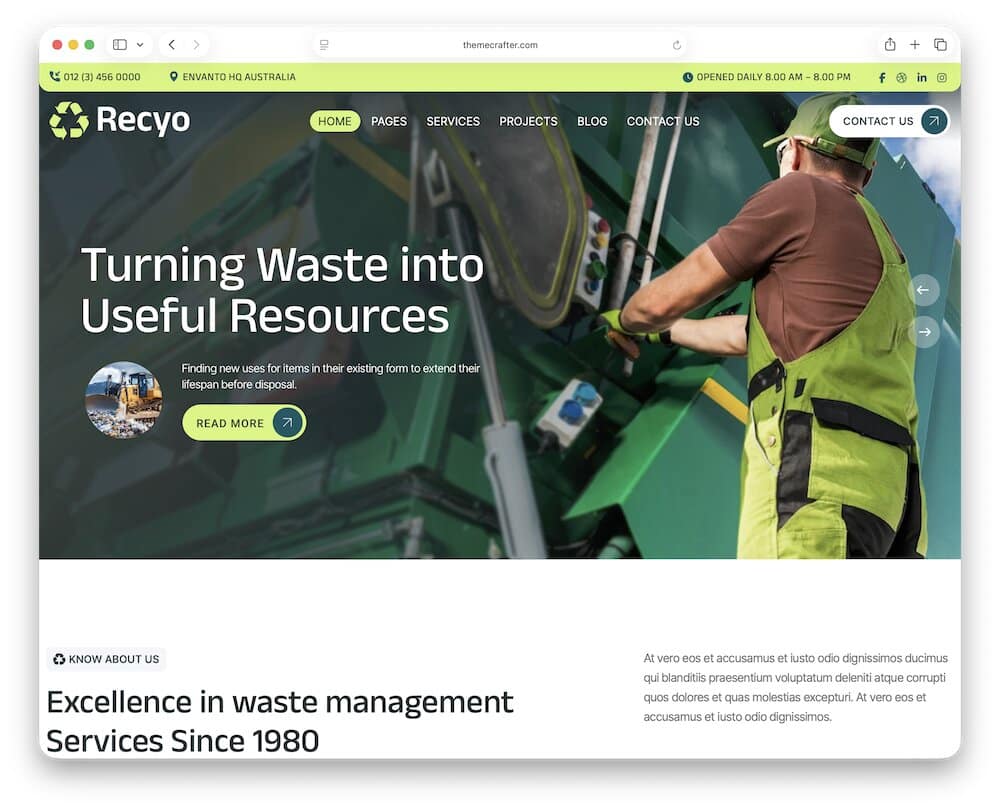
Recyo is the most direct recycling WordPress theme in this collection.
It was built specifically for recycling centers, waste management companies, environmental services, composting businesses, e-waste firms, and circular economy projects.
The theme includes four homepage options, along with dedicated post types for services, projects, and team members.
This gives you a solid structure for explaining which materials you handle, showcasing completed recycling projects, introducing your staff, and guiding visitors to contact the business.
I particularly like the recycling-specific design elements.
Recyo includes a custom icon set for the waste and recycling industry, plus counters, timelines, progress bars, pricing tables, portfolios, and team layouts.
You could use these to display recovered material totals, landfill diversion rates, collection plans, processing stages, or environmental targets.
It’s all in the little details.
Elementor handles the page editing, and the theme adds its own custom widgets.
You also get one-click demo import, theme color and typography controls, several form integrations, WooCommerce support, WPML compatibility, and RTL support.
The project and timeline layouts could be especially useful for showing how materials move from collection and sorting to processing and reuse.
I’d also use the pricing widgets for commercial collection plans, consultation packages, or recurring recycling services.
Recyo’s exact niche fit and recent development make it one of the strongest options for a modern commercial recycling website.
2.1. Why I Like Recyo Theme
Recyo needs very little conversion from a general eco theme.
Its service, project, team, pricing, and recycling-specific elements already support the core needs of a commercial recycling business.
2.2. Recyo Is Good For
- Commercial recycling companies
- Recycling and processing facilities
- E-waste businesses
- Circular economy and upcycling companies
2.3. Recyo WordPress theme features:
- 10+ sales
- 4.4+ star ratings
- Four recycling and environmental homepage layouts
- Custom recycling and waste-management icon set
- Price: $59 (may vary)
3. GoGreen
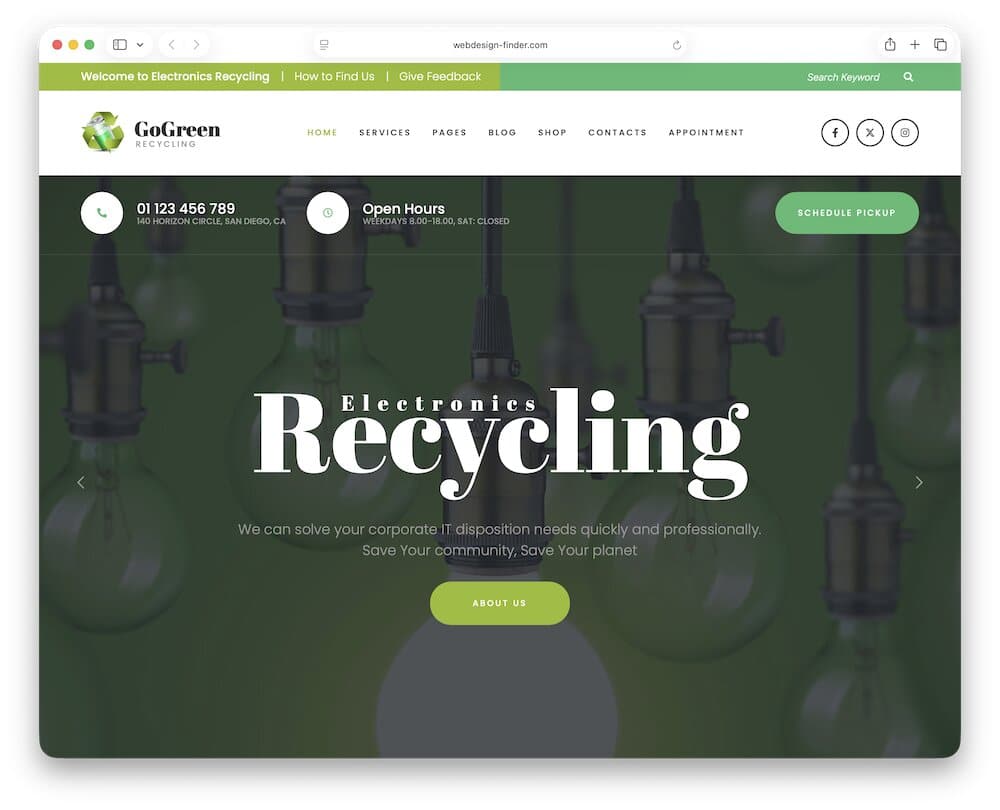
GoGreen is a practical option for companies working with electronic waste, alternative energy, environmental technology, recycling, and material processing.
Its strongest angle is e-waste.
Thus, I’d use it for a business that collects or processes computers, phones, batteries, office electronics, and other technology that should not end up in a landfill.
The theme comes with the Elementor page builder, so you can edit everything visually without coding.
It also supports Contact Form 7, and WooCommerce, which is handy if you want to sell recycled products, collection packages, equipment, or related environmental services.
I’d structure the site around separate pages for electronics recycling, battery collection, secure IT disposal, commercial pickups, and accepted materials.
The service sections could also explain how devices are collected, sorted, wiped, dismantled, and processed.
Moreover, the design is more traditional than Recyo or Ecobin. But that’s exactly what gives this theme an edge.
3.1. Why I Like GoGreen Theme
GoGreen offers a more technical recycling option for the roundup.
Its positioning fits businesses that handle electronics, equipment, batteries, and other specialist materials.
3.2. GoGreen Is Good For
- Electronics recycling companies
- Battery collection services
- IT asset disposal businesses
- Eco-technology and processing companies
3.3. GoGreen WordPress theme features:
- 380+ sales
- 5-star ratings
- Strong e-waste and eco-technology positioning
- Responsive layout with ongoing theme updates
- Price: $59 (may vary)
4. Ecobin
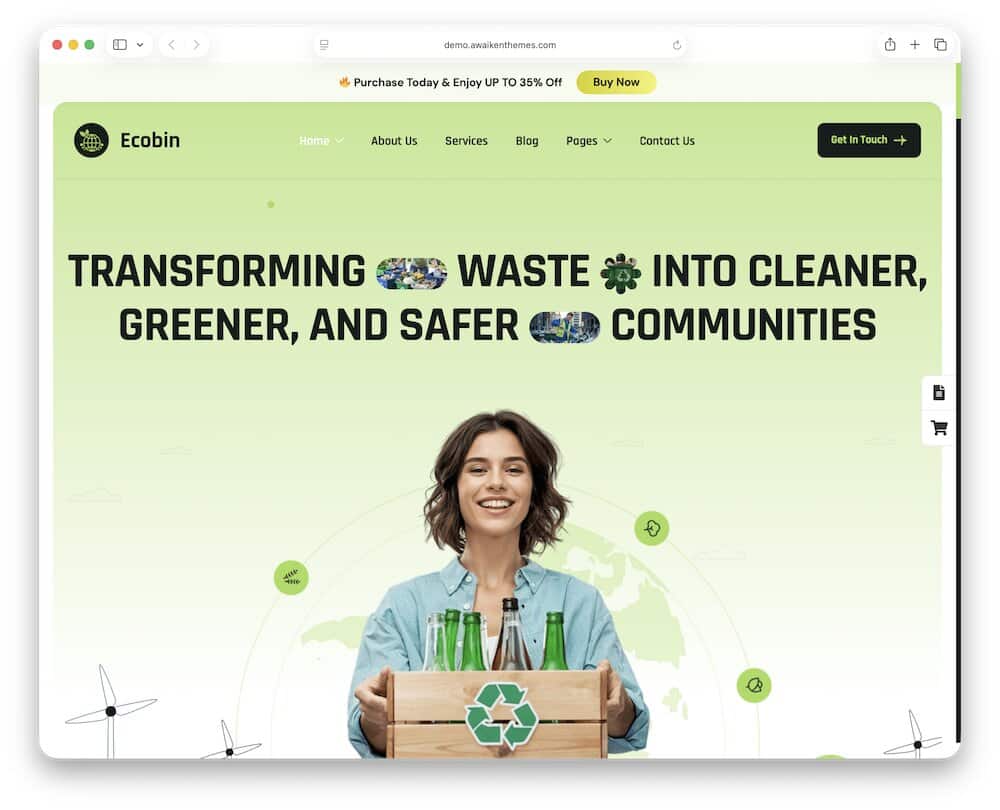
Ecobin is a clean recycling WordPress theme for businesses that want a modern website without losing the practical, service-focused structure.
The theme includes three homepage layouts for recycling services, industrial waste management, community programs, and environmental consulting.
Its green accents, spacious sections, large headings, and cleaner typography give the demo a polished look from the start.
Keep in mind that you can change everything, tailoring the default look according to your needs. (And this applies to all themes on this list!)
You also get a strong collection of internal pages.
These cover services, individual service details, projects, project details, pricing, testimonials, FAQs, team members, image and video galleries, contact information, etc.
I’d use the project pages for recycling case studies and the galleries for facilities, machinery, collected materials, or community initiatives.
Ecobin uses Elementor and Elementor Pro, so you can edit the layouts visually.
Global color and typography controls make it easier to apply consistent branding, while the customizable header and footer give you more control over calls to action and contact details.
One-click demo importing also speeds up the initial setup.
I’d use Ecobin for a commercial recycling company, environmental consultancy, eco-startup, or local sustainability program that wants to look established without appearing too corporate.
4.1. Why I Like Ecobin Theme
Ecobin has the cleanest presentation in this collection.
It combines practical service pages with modern project, gallery, pricing, and testimonial layouts.
4.2. Ecobin Is Good For
- Modern recycling companies
- Environmental consultancies
- Sustainability startups
- Community recycling programs
4.3. Ecobin WordPress theme features:
- 30+ sales
- 4.5+ star ratings
- Three modern homepage layouts
- One-click demo import, WPML, and Contact Form 7 support
- Price: $49 (may vary)
5. Wastewise
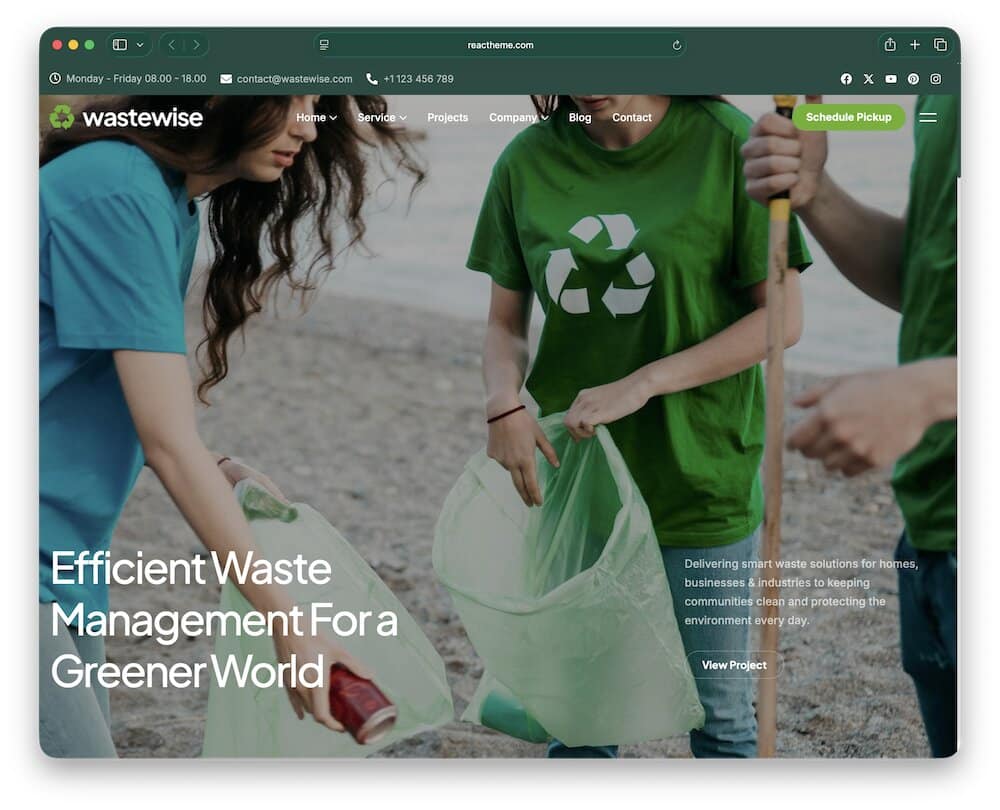
Wastewise is excellent for companies that collect recyclable materials from homes, offices, factories, and commercial properties.
The theme includes four homepage demos and more than 20 internal pages.
Its layouts cover recycling services, waste collection, residential pickup, commercial disposal, green waste, and related environmental solutions.
That gives you enough variety to build a service-focused website without starting from a blank page.
I’d use Wastewise for a company offering scheduled cardboard, paper, plastic, glass, metal, or office recycling pickups.
The service pages can explain what materials you accept, how collections work, which areas you cover, and whether customers can arrange one-time or recurring pickups.
You edit pages with Elementor, while the included header, footer, mega menu, and off-canvas builders give you extra control over the overall site structure.
You can create visible quote buttons, mobile contact panels, service menus, and different headers for key landing pages without coding.
Wastewise also supports WooCommerce.
That could be useful for selling collection packages, recycling bins, recurring service plans, or related products.
However, most local recycling businesses will probably get more value from a clear quote or collection request form than a full online store.
5.1. Why I Like Wastewise Theme
Wastewise connects recycling information with a practical collection process.
It gives businesses enough room to explain materials, coverage areas, pickup options, and service plans while guiding visitors toward requesting a collection.
5.2. Wastewise Is Good For
- Commercial recycling collection
- Office recycling programs
- Residential recyclable pickups
- Green waste collection services
5.3. Wastewise WordPress theme features:
- 60+ sales
- 4.3+ star ratings
- Four homepage demo layouts
- More than 20 included internal pages
- Price: $59 (may vary)
What A Recycling Website Needs To Build Trust
1. Recycling Services Overview
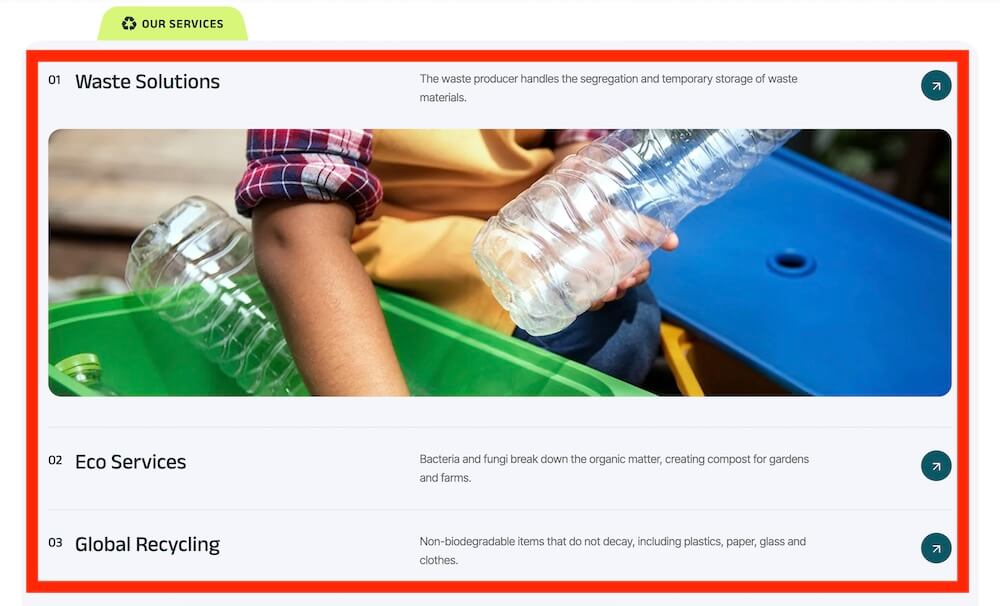
Create separate pages for each main service or material.
These may include:
- Paper and cardboard recycling
- Plastic recycling
- Metal recycling
- Glass recycling
- Electronics and battery recycling
- Construction material recycling
- Commercial recycling
- Organic and green waste recycling
Separate pages make the site easier to use.
They can also help you rank for more specific searches.
2. Accepted And Restricted Materials
Make it obvious what customers can and cannot bring or book for collection.
Include details such as:
- Accepted materials
- Restricted items
- Minimum quantities
- Preparation requirements
- Contamination rules
- Hazardous material policies
This can reduce unsuitable inquiries and save your team time.
3. A Simple Explanation Of The Process
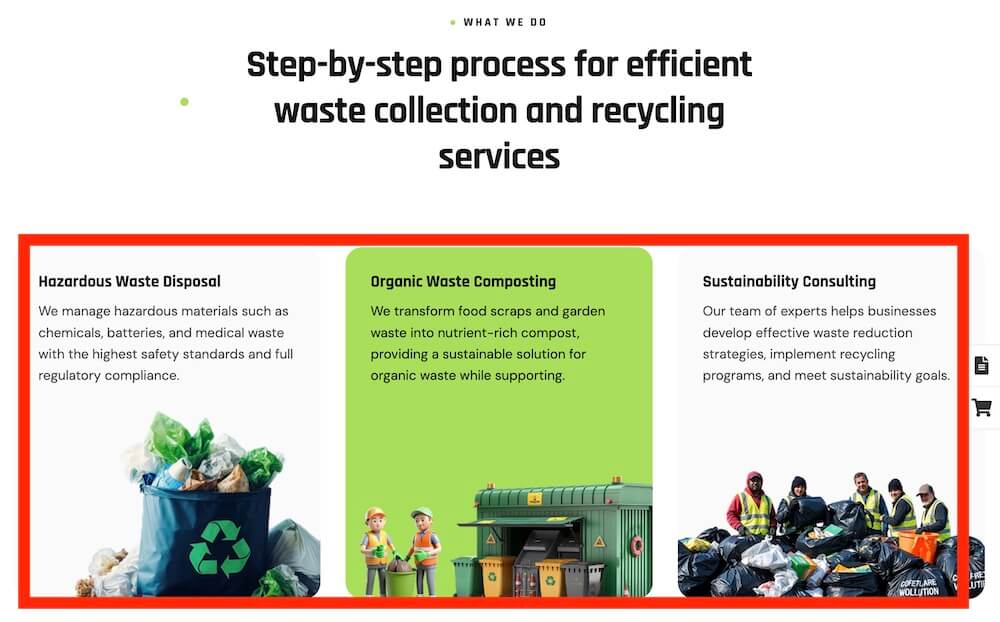
People want to know what happens after collection or drop-off.
Explain the process in a few clear steps:
- Collection or delivery
- Sorting
- Processing
- Recovery
- Reuse or resale
This is especially important for businesses that want to prove materials are handled responsibly.
4. Real Environmental Data
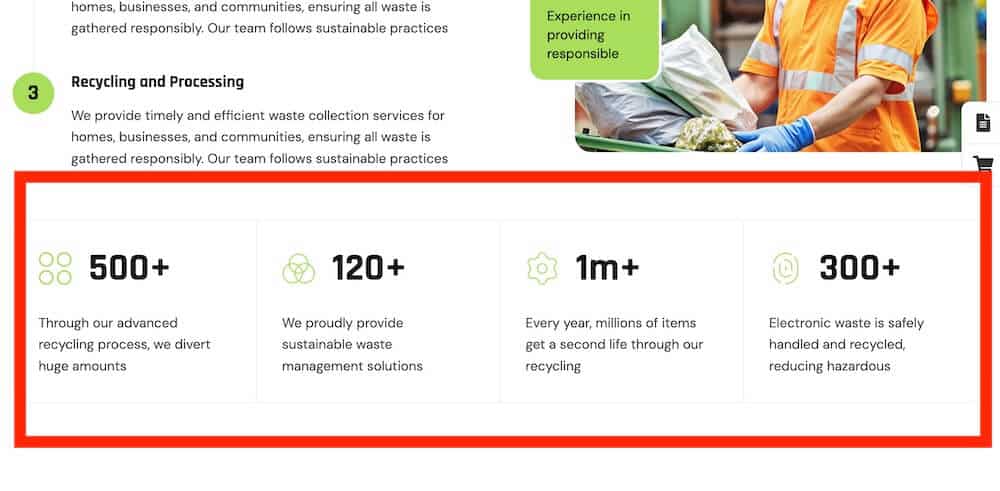
Avoid vague claims like “helping the planet” without proof.
Show measurable results where possible, such as:
- Materials recovered
- Waste diverted from landfill
- Recycling rates
- Carbon savings
- Trees saved
- Energy saved
- Clients or locations served
Counters and impact sections can make this data easy to scan.
5. Certifications And Compliance
Recycling customers often care about legal and environmental standards.
Add details about:
- Waste licences
- Environmental certifications
- Health and safety policies
- Data destruction standards
- Chain-of-custody documents
- Industry memberships
You can also offer downloadable certificates or compliance documents.
6. Service Areas And Drop-Off Locations
Visitors should quickly see where they can use your services.
Include:
- Facility addresses
- Opening hours
- Collection zones
- Coverage maps
- Accepted materials by location
- Contact details for each branch
Maps are especially useful for businesses with several drop-off points.
One of these WordPress map plugins can help you display several facilities, collection zones, routes, and location filters.
7. A Clear Quote Or Collection Form
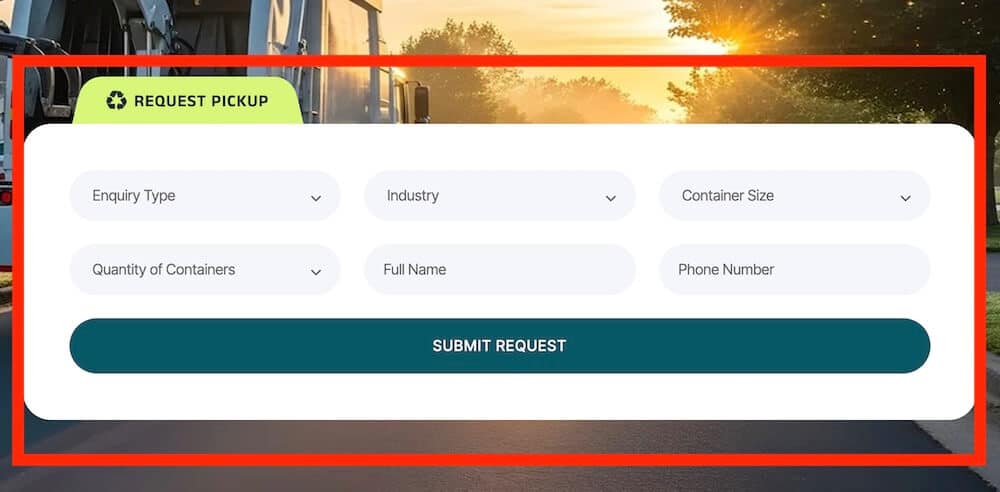
Keep forms practical and easy to complete.
Fields may include:
- Material type
- Approximate quantity
- Collection address
- Preferred date
- Business type
- One-time or recurring service
- Photo upload
I’d keep the form short and ask for extra details later if needed.
8. Projects And Case Studies
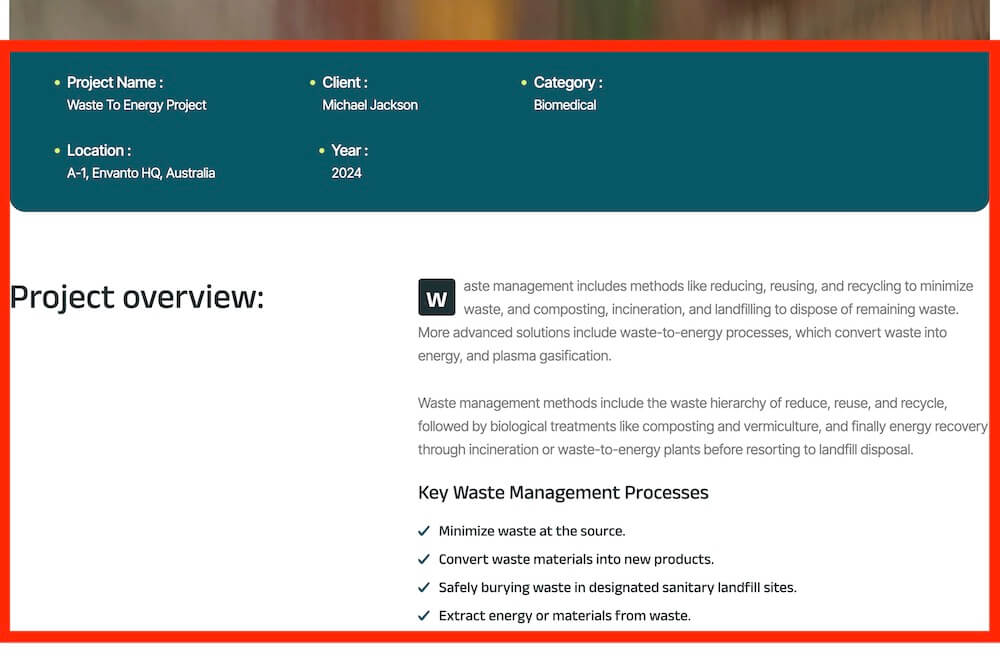
Case studies provide stronger proof than generic marketing claims.
Show:
- The client’s challenge
- Materials collected
- Recycling method
- Volume recovered
- Environmental results
- Timeframe
This works particularly well for larger commercial and industrial projects.
9. Customer Reviews And Partnerships
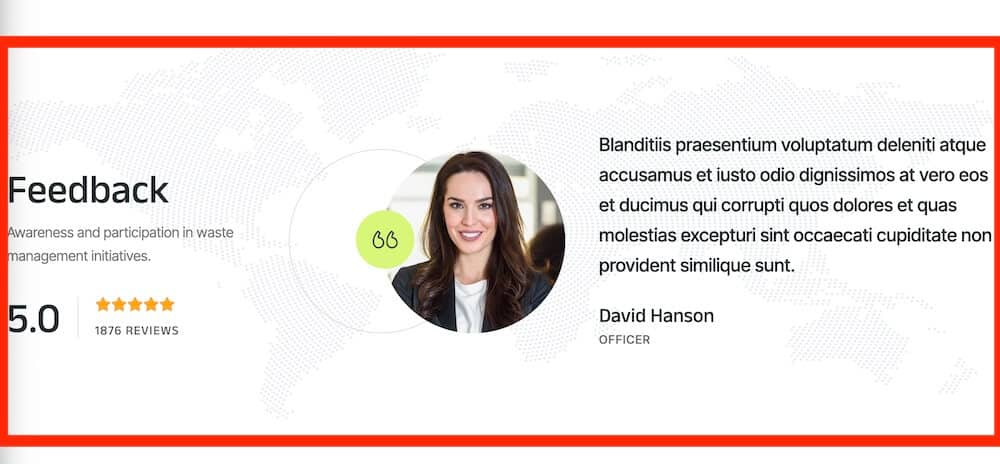
Add reviews from real customers, companies, schools, councils, or community groups.
You can also display:
- Client logos
- Partner organizations
- Facility photos
- Team photos
- Vehicle and equipment images
Real proof makes the company look more established and transparent.
A WordPress testimonial plugin can help you collect and display feedback from businesses, councils, schools, and residential customers.
10. Helpful FAQs
Answer common questions such as:
- Which materials do you accept?
- Do you collect from homes?
- Do you offer commercial pickups?
- What happens to recycled materials?
- Do you provide recycling reports?
- Can you recycle electronics?
- Are there minimum quantities?
- Do you handle confidential data?
Good FAQs remove uncertainty before someone contacts you.
How To Choose A Recycling WordPress Theme
- Match it to your business: A recycling facility needs different layouts than a nonprofit, consultancy, or collection service.
- Check the niche fit: Exact recycling themes need less editing than broad environmental themes.
- Review the service pages: Make sure you can create separate pages for each material, service, or industry.
- Look for project layouts: Case studies help you show recycling results, completed jobs, and environmental impact.
- Check data elements: Counters, charts, and progress bars are useful for recycling rates, recovered materials, and landfill diversion.
- Choose a builder you know: Elementor is usually easier for beginners, while some themes use WPBakery.
- Review form flexibility: You may need quote requests, collection bookings, material inquiries, or donation forms.
- Check location features: Maps and location pages matter if you operate drop-off centers or cover several areas.
- Look at update history: Choose a theme that receives regular compatibility and security updates.
- Read ratings and comments: Check for recurring problems with setup, plugins, mobile design, and support.
- Think about extra features: Nonprofits may need events and donations, while commercial companies may need pricing or WooCommerce.
- Avoid unnecessary layouts: Pick a theme that supports recycling, recovery, and sustainability without adding too much waste-removal content.
Conclusion: Which Recycling WordPress Theme Is Best?
There is no one recycling theme to rule them all.
The best recycling WordPress theme depends on the type of green business you run.
Recyo is my top overall pick for commercial recycling companies. It has the strongest niche fit, modern Elementor editing, recycling-specific icons, and useful layouts for services, projects, teams, and pricing.
Choose Ecologist if you run an environmental nonprofit, community program, or sustainability campaign. Its donation, event, project, and impact layouts are much better suited to public engagement.
GoGreen is the strongest choice for e-waste, battery recycling, and eco-technology businesses.
Go with Ecobin if modern design is your priority.
Meanwhile, Wastewise works best for companies that combine recycling with regular residential or commercial collection services.
If I had to pick one for a typical recycling business, Recyo is my fav.
It requires the least adaptation and provides the most relevant structure from day one.
GO!
FAQs About Recycling WordPress Themes
What is the best recycling WordPress theme?
Recyo is my top pick for a commercial recycling business. It has the strongest recycling-specific structure and uses Elementor.
Which recycling theme is best for a nonprofit?
Ecologist is the better choice for nonprofits, campaigns, community programs, and environmental organizations.
Which theme is best for e-waste recycling?
GoGreen is the strongest option for electronics, batteries, IT equipment, and eco-technology services.
Can I use these themes for a recycling center?
Yes. You can create pages for accepted materials, opening hours, drop-off locations, services, and contact details.
Can I add pages for different recyclable materials?
Yes. You can build separate pages for paper, plastic, metal, glass, electronics, batteries, and other materials.
Do recycling websites need collection request forms?
Yes, especially if you offer residential or commercial pickups. Keep the form short and ask for material type, quantity, address, and preferred date.
Should a recycling website show environmental data?
Yes. Recycling rates, recovered materials, landfill diversion, and carbon savings help support your environmental claims.
Can I add drop-off locations and maps?
Yes. These themes support contact and location pages, while map plugins can add more advanced location features.
Do recycling WordPress themes support WooCommerce?
Several do, including Recyo, Ecologist, GoGreen, Ecobin, and Wastewise. WooCommerce can support products, service packages, donations, or online payments.
Can I customize these themes without coding?
Yes. Most themes in this roundup use Elementor. Ecologist uses WPBakery instead.
What pages should a recycling website include?
Add pages for services, accepted materials, locations, industries, certifications, projects, FAQs, contact details, and quote requests.
Are recycling and waste removal WordPress themes the same?
Not exactly. Waste removal WordPress themes focus on collection, disposal, dumpsters, and local pickups. Recycling themes focus more on material recovery, processing, sustainability, and environmental results.