
A good butcher shop website makes the meat look fresh, the business look trustworthy, and the buying process stupidly easy.
Simple.
You may be selling steaks, sausages, chops, roasts, charcuterie, BBQ bundles, or full meat boxes, but customers still want the same basics: clear cuts, clear weights, clear prices, and no confusion about delivery or pickup.
That’s what I focused on when choosing these best butcher shop WordPress themes.

I looked at WooCommerce setup, product layouts, meat categories, filters, bundles, subscriptions, local delivery potential, mobile shopping, and how well each theme handles the details that matter in this niche.
Some suit traditional butcher shops better.
Others make more sense for farms, premium meat brands, seafood sellers, or businesses pushing weekly and monthly meat boxes.
And presentation matters here.
A beautifully marbled ribeye, a stacked BBQ box, or a row of house-made sausages already does half the selling.
The theme just needs to give those products enough space and make the next step obvious.
And here are my favorite themes for butchers and meat shops.
This post covers:
- Quick Picks: Top Butcher Shop WordPress Themes By Use Case
- Best Butcher Shop WordPress Themes Compared
- What Makes A Good Butcher Shop WordPress Theme?
- What A Butcher Shop Product Page Should Include
- Meat Boxes, Bundles & Subscriptions: Are They Worth Offering?
- How To Make Your Butcher Shop Website Look Premium
- Conclusion: Which Butcher Shop WordPress Theme Should You Choose?
- FAQs About Butcher Shop WordPress Themes
Quick Picks: Top Butcher Shop WordPress Themes By Use Case
- Best overall: Steako — the strongest all-around choice for modern butcher shops, meat boxes, BBQ bundles, subscriptions, delivery, and premium meat sales.
- Best for farms & bigger catalogs: Bubulla — a great fit if you sell beef, pork, poultry, seafood, farm products, or a wider mix of fresh food under one brand.
- Best for meat boxes & subscriptions: MeatHouse — the standout choice if recurring boxes, family packs, mixed bundles, or subscription-style ordering are central to the business.
- Best modern WooCommerce option: Meatlers — a polished choice for online meat stores that want flexible shop layouts, useful product education, and a cleaner ecommerce setup.
- Best established meat-store theme: Butcher — a solid option for straightforward online meat shops, butcher counters, seafood stores, and businesses that want a more traditional WooCommerce structure.
Best Butcher Shop WordPress Themes Compared
| Theme | Best For | Page Builder | Shop Focus | Standout Strength | Price |
|---|---|---|---|---|---|
| Steako | Modern butcher shops, meat-box brands & delivery businesses | Elementor | Meat boxes, subscriptions, BBQ bundles, fresh meat & seafood | Strongest all-around niche setup with boxes, filtering, sourcing, and pickup/delivery support | $19 |
| Bubulla | Meat farms, larger catalogs & mixed fresh-food stores | WPBakery | Beef, pork, sausages, seafood, caviar & farm products | Best for broad catalogs that go beyond a traditional butcher counter | $69 |
| MeatHouse | Subscription businesses & recurring meat boxes | Elementor | Meat boxes, bundles, subscriptions & product variations | Built-in meat-box subscription functionality | $59 |
| Meatlers | Modern online butcher shops & premium meat stores | Elementor | Fresh meat, organized categories, product education & content | Butcher’s Guide plus strong blog and WooCommerce structure | $49 |
| Butcher | Traditional meat stores & straightforward WooCommerce shops | KingComposer | Fresh meat, seafood, organic food & classic ecommerce | Simple, familiar shop structure without unnecessary complexity | $59 |
1. Steako – Best Overall Butcher Shop WordPress Theme
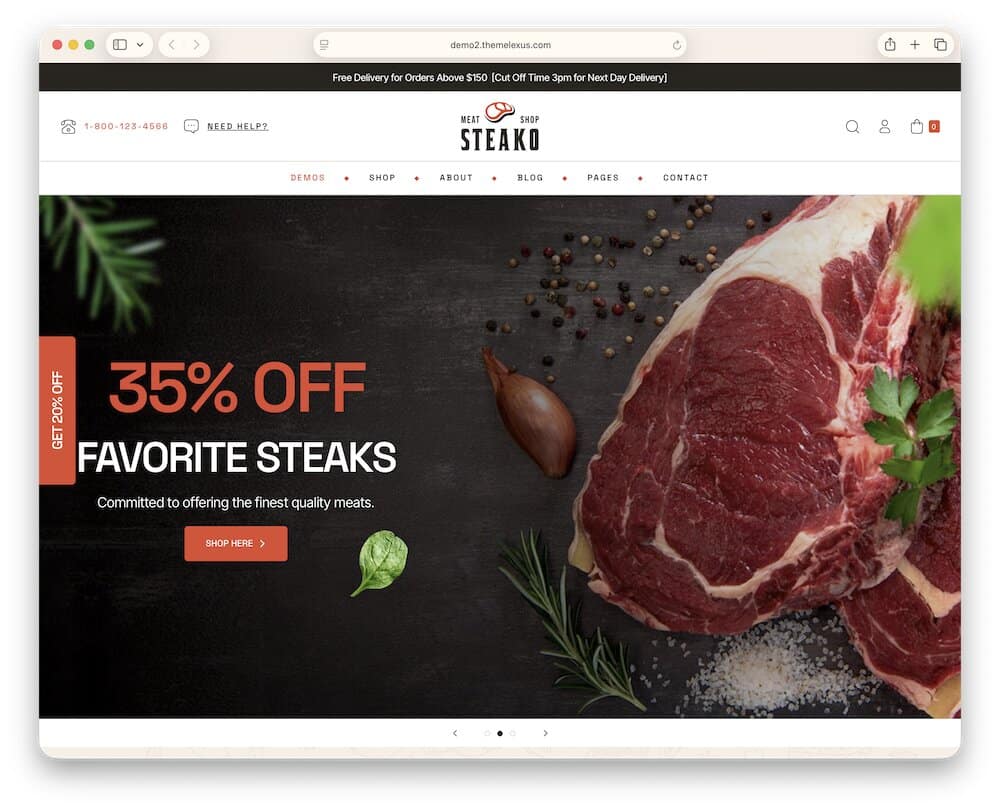
Steako gets the top spot because it actually speaks the language of modern meat retail.
Not just “butcher shop.”
Meat boxes, BBQ bundles, fresh delivery, subscriptions, partner farms, seafood, Wagyu, sausages, ready-to-cook products — the whole setup is much closer to how many online butcher businesses sell today.
The meat-box side is especially strong.
You can showcase weekly or monthly boxes, BBQ bundles, curated selections, and individual cuts, while customers can filter by meat type such as beef, pork, poultry, lamb, Wagyu, or seafood.
That makes Steako useful for a store with a bigger catalog, not just a handful of steaks and sausages.
I also like how the demo handles custom and preset boxes.
Shoppers can either choose a ready-made box or build something closer to what they actually want. It also clearly supports delivery and store pickup, which is exactly the kind of practical detail a real butcher shop needs.
The sourcing side is handled well, too.
Steako includes layouts for partner farms and gives you space to explain where the meat comes from, how you source it, and what standards you follow.
For premium meat, organic products, or farm-to-table businesses, that can do a lot for trust.
WooCommerce powers the shop, while Elementor handles the visual customization.
You also get Ajax cart features, quick view, wishlists, one-click demo import, and 20+ inner pages covering things like About, FAQs, services, meat-box details, and farm information.
1.1. Steako WordPress theme overview:
- Best for: Modern butcher shops, meat-box businesses, delivery services, farms, and premium meat stores
- Page builder: Elementor
- Shop focus: Meat boxes, subscriptions, bundles, fresh meat delivery, seafood, and premium cuts
- Why I like it: It goes beyond basic product pages with strong meat-box layouts, filtering, sourcing sections, and delivery/pickup support.
- Price: $19
2. Bubulla – Best For Meat Farms & Larger Product Ranges
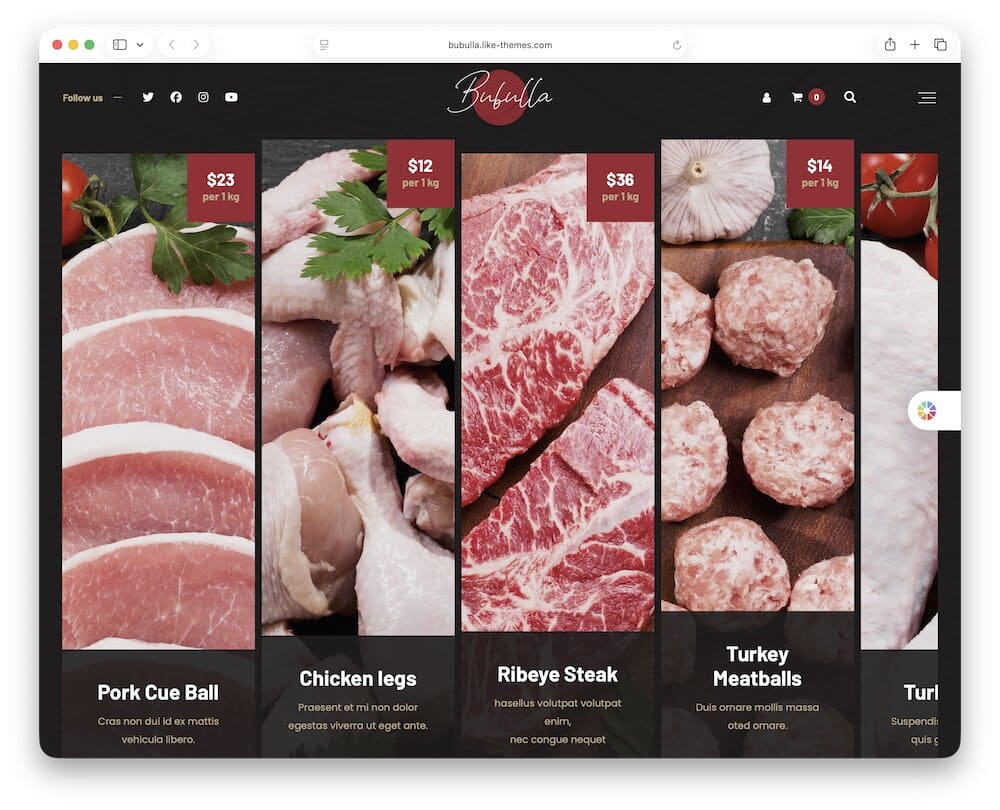
Bubulla is the theme I’d pick when the shop sells a lot more than steaks and sausages.
It’s built for meat farms, butcher shops, raw meat stores, seafood businesses, caviar companies, pork and salmon farms, delivery services, and wider food retailers.
Note: If your store leans heavily into farm-fresh, organic, or locally sourced products, you may also want to browse our organic food WordPress themes for more farm-to-table store designs.
In other words, it has much more breathing room than a narrowly focused butcher theme.
The catalog support is a big reason why.
You can sell beef, pork, sausages, steaks, raw products, fish, shrimp, crab, lobster, oysters, caviar, and more through WooCommerce.
Bubulla makes sense for shops with a mixed fresh-food range, not just a handful of cuts.
It also comes with several homepage directions, including dedicated layouts for meat delivery, meat stores, and seafood, which makes the theme easier to adapt to different business models.
That versatility is useful if you’re building a farm-to-table brand, a butcher with a seafood counter, or a larger regional store with several departments.
You also get product catalogs, individual product pages, galleries, testimonials, blog layouts, shopping cart and order pages, plus one-click demo import.
Customization runs through WPBakery, with built-in color and layout controls.
You can start with fresh meat, then add seafood, delivery, farm products, specialty goods, or a larger online catalog later without the theme suddenly looking out of place.
2.1. Bubulla WordPress theme overview:
- Best for: Meat farms, butcher shops, seafood stores, and larger fresh-food catalogs
- Page builder: WPBakery
- Shop focus: Beef, pork, sausages, steaks, seafood, caviar, raw products, and delivery
- Why I like it: It handles a much broader product range than most butcher themes, which makes it a strong fit for farms and mixed fresh-food businesses.
- Price: $69
3. MeatHouse – Best For Meat Boxes & Subscriptions
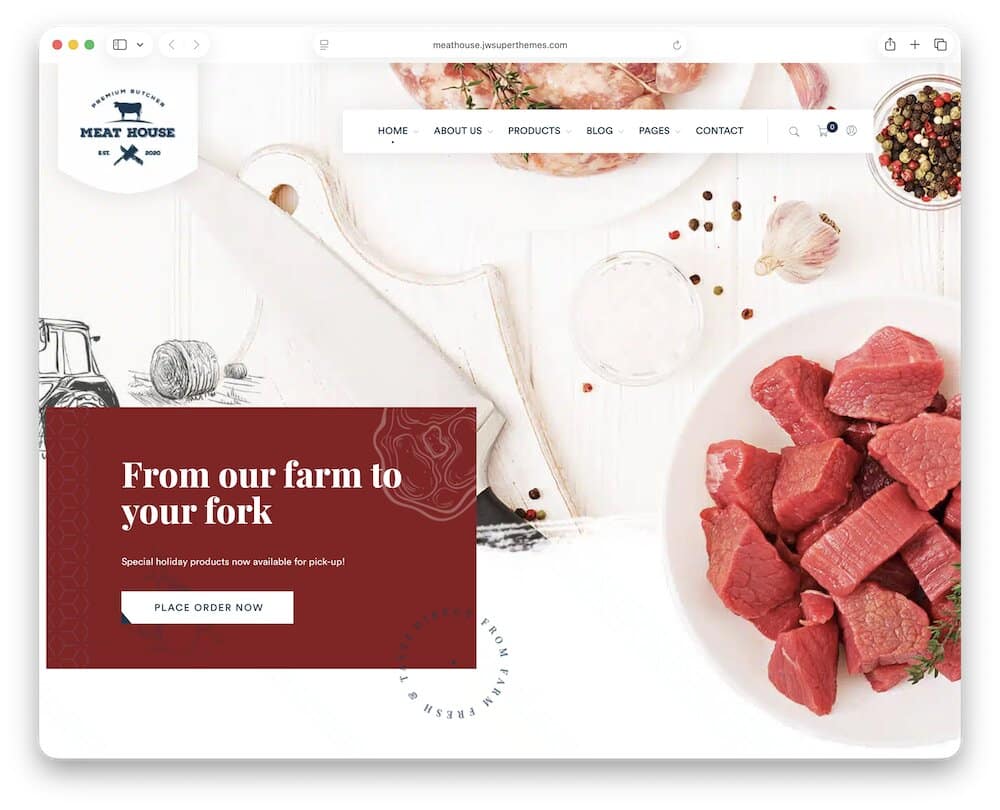
MeatHouse is where things get more interesting.
Instead of stopping at standard product pages, it gives you tools for building meat boxes and subscriptions.
This makes it a much better fit for butcher shops selling recurring boxes, BBQ packs, family bundles, or curated monthly selections.
That alone makes it stand out.
A butcher could use it for a weekly mixed box, a steak subscription, a family pack, or a rotating selection of beef, pork, and poultry without forcing customers to shop cut by cut every time.
The theme is also broad enough for farms, markets, restaurants, delivery services, and traditional butcher shops, so it doesn’t lock you into one business model.
You get over five demo designs, WooCommerce variation swatches, the built-in meat-box subscription feature, Contact Form 7, one-click demo import, and Elementor for visual editing.
I especially like the variation swatches here.
For meat shops, they can present different cuts, pack sizes, weights, or other product options more cleanly than a boring dropdown.
MeatHouse also gives you enough flexibility to run a classic butcher store today and layer in subscriptions or recurring boxes later.
That’s useful.
3.1. MeatHouse WordPress theme overview:
- Best for: Butcher shops, meat-box businesses, farms, delivery services, and recurring-order stores
- Page builder: Elementor
- Shop focus: Meat boxes, subscriptions, bundles, product variations, and fresh meat sales
- Why I like it: The built-in meat-box subscription setup gives it a real niche advantage over more basic butcher-store themes.
- Price: $59
4. Meatlers – Best Modern WooCommerce Butcher Theme
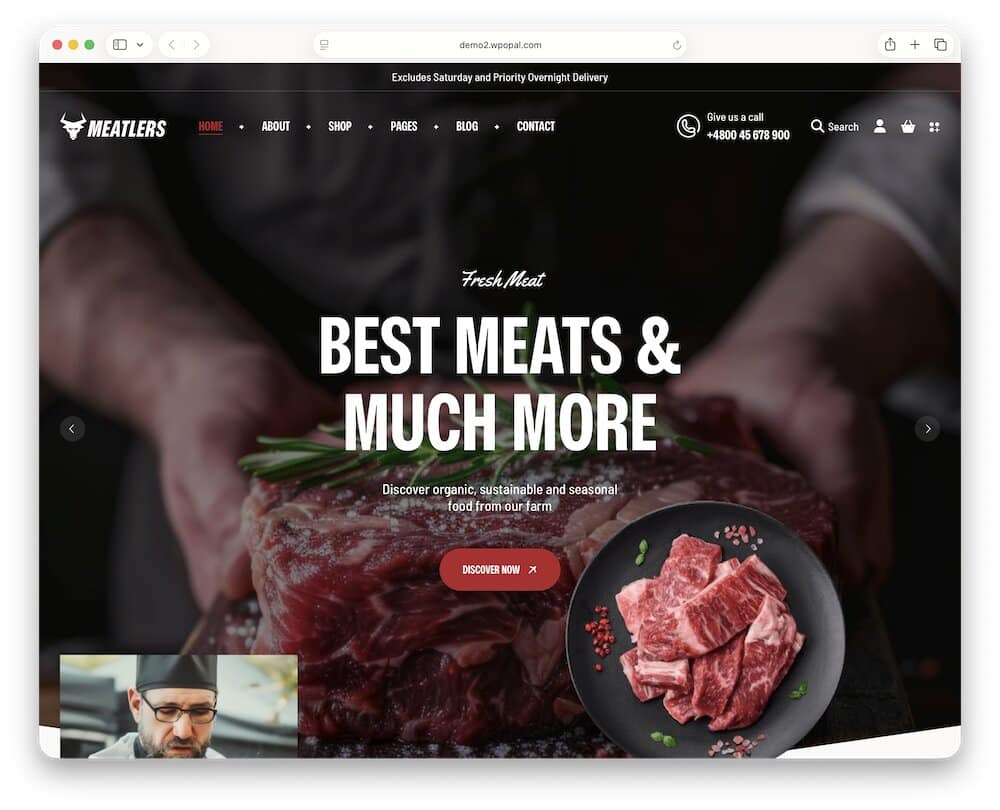
Meatlers is the cleanest, most polished option in this lineup if you want a modern butcher shop without losing that strong meat-market identity.
It comes with four homepage designs for butcher shops and meat stores, plus organized meat categories, flexible WooCommerce shopping, and plenty of room for a growing catalog.
One feature I really like is the Butcher’s Guide.
You can use it to explain storage, preparation, cooking tips, or other useful product information.
That’s genuinely valuable here because not every customer knows what to do with a less familiar cut once they get it home.
The blog setup adds another useful layer.
Recipes, grilling tips, farm stories, cut guides, or “how to cook it” content can turn the site into more than a product catalog, while also creating more search traffic opportunities over time.
What makes Meatlers stand out is the balance.
It isn’t as box- or subscription-heavy as Steako or MeatHouse, and that’s actually the point.
If you want a polished online butcher shop with clear categories, strong product presentation, and useful educational content, this one fits beautifully.
4.1. Meatlers WordPress theme overview:
- Best for: Modern butcher shops, premium meat stores, and online meat retailers
- Page builder: Elementor
- Shop focus: Fresh meat, organized meat categories, WooCommerce sales, product education, and content marketing
- Why I like it: The Butcher’s Guide and blog setup make it especially useful for stores that want to sell meat and teach customers how to store, prepare, and cook it.
- Price: $49
5. Butcher – Best Straightforward Meat Store Theme
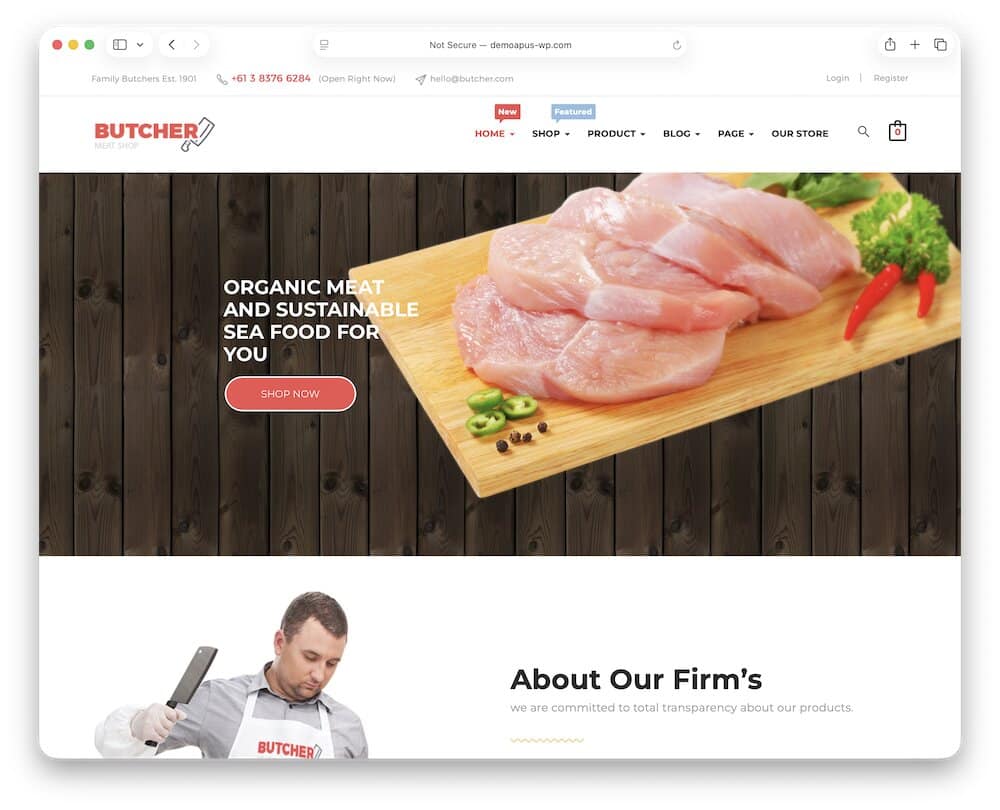
Butcher is the no-nonsense option here.
It’s made for businesses that mainly want a proper online meat shop with clear product browsing, classic WooCommerce functionality, and enough flexibility to sell meat, seafood, organic food, vegetables, or other fresh products from the same store.
The shop features cover the essentials well.
You get wishlist support, AJAX cart, quick view, product carousels, image lightboxes, and both grid and list shop views, so customers can browse cuts and products without the store getting in their way.
There are also 4+ homepage layouts, multiple headers, blog options, boxed or full-width layouts, and plenty of theme controls for colors and typography.
Customization is handled with KingComposer, not Elementor, so this is the one theme in the roundup where the editing workflow feels more traditional.
Still, if you care more about running a clean WooCommerce meat store than chasing the newest builder, that may not bother you much.
What I like here is the simplicity.
No complicated meat-box system. No subscription-heavy setup. No oversized feature list trying to turn your butcher shop into a tech platform.
Just products, categories, shopping, and a familiar ecommerce structure.
5.1. Butcher WordPress theme overview:
- Best for: Traditional butcher shops, meat stores, seafood shops, and mixed fresh-food retailers
- Page builder: KingComposer
- Shop focus: Fresh meat, seafood, organic food, product browsing, and straightforward WooCommerce sales
- Why I like it: It keeps the ecommerce side simple and gives you the core shop features you need without forcing a more complex business model.
- Price: $59
What Makes A Good Butcher Shop WordPress Theme?
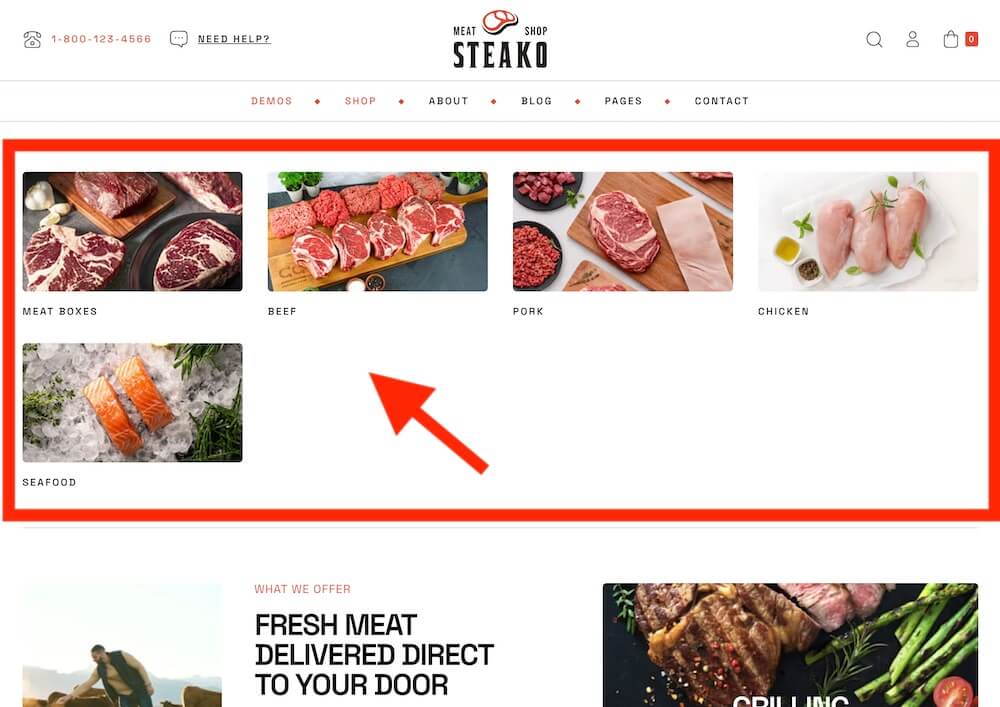
A butcher shop theme should make it easy to browse meat, understand each cut, and place an order without friction.
That sounds basic. But plenty of food-store themes get it wrong.
Here’s what I’d look for:
- Clear meat categories: Beef, pork, lamb, poultry, sausages, seafood, charcuterie, BBQ cuts, and meat boxes should be easy to browse.
- Strong product pages: A good theme should give you room for cut name, weight, price, origin, storage info, cooking tips, and delivery details without making the page look crowded.
- Support for variations: Different weights, pack sizes, cuts, and quantities should be simple to choose.
- Meat boxes and bundles: BBQ boxes, family packs, steak selections, and mixed bundles can be a big part of the business, so the theme should handle them cleanly.
- Subscription potential: If you plan to sell weekly or monthly meat boxes, make sure the theme works well with recurring-order or subscription setups.
- Delivery and pickup: Local delivery, click and collect, delivery zones, and pickup windows are especially important for fresh meat. (If your delivery setup gets more complex, one of these WooCommerce shipping plugins can help with weight-based rates, delivery conditions, tracking, and other shipping rules.)
- Useful filtering: Larger shops benefit from filters for meat type, cut, price, weight, farm, or other product details.
- Good product photography layouts: Meat is visual. Steaks, chops, sausages, marbling, packaging, and ready-made boxes need enough space to look appetizing.
- Sourcing and farm information: If you work with local farms, pasture-raised meat, organic products, or premium suppliers, the theme should give you room to tell that story.
- Mobile-friendly shopping: Customers should be able to browse cuts, check weights, add products, and complete checkout easily from a phone.
- WooCommerce compatibility: This is the foundation. Products, stock, payments, coupons, shipping, and customer accounts all need to work smoothly.
- Simple customization: Elementor or another visual builder makes it much easier to adjust product sections, banners, colors, typography, and seasonal offers.
- Room for useful content: Recipes, cut guides, storage tips, cooking advice, farm stories, and BBQ content can help both customers and search visibility.
What A Butcher Shop Product Page Should Include
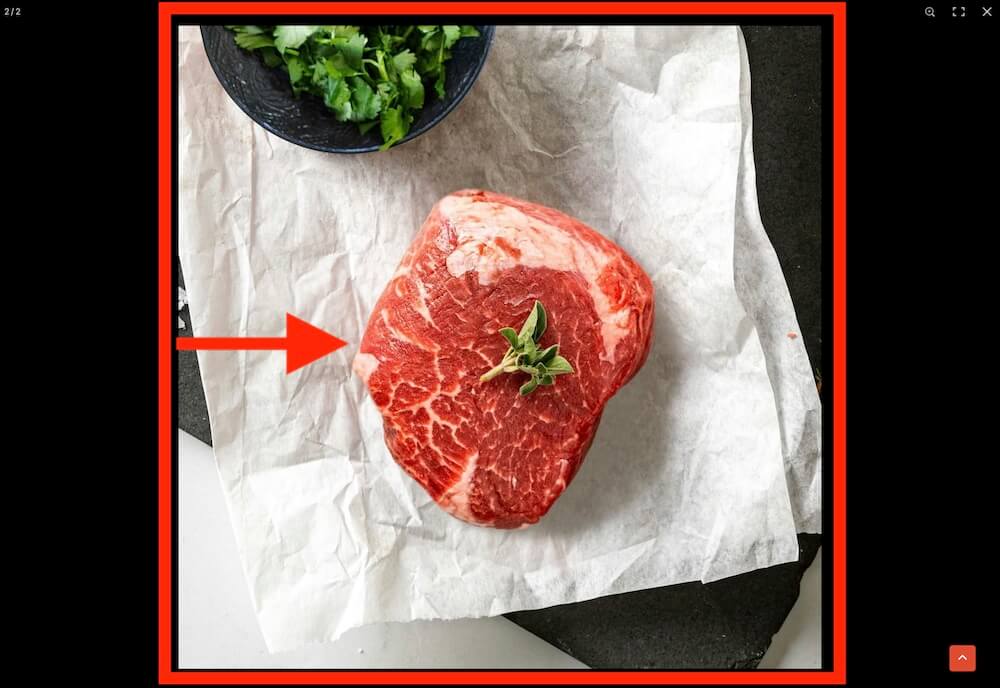
Here’s what I’d include:
- Cut name: Ribeye, sirloin, brisket, pork shoulder, lamb rack, chicken thighs — make the product instantly clear.
- Meat type: Beef, pork, lamb, poultry, game, or seafood.
- Weight: Show the exact pack size or available weight options. This is one of the first details shoppers look for.
- Price: If you charge per pack, per kilogram, or per pound, make that obvious.
- Origin: Let customers know where the meat comes from, whether that’s a local farm, regional producer, or specific country.
- Quality details: Add relevant information such as grass-fed, pasture-raised, organic, dry-aged, Wagyu, or marbling grade where applicable.
- Cut description: Briefly explain texture, richness, tenderness, and what makes the cut different.
- Best cooking method: Grill, roast, smoke, braise, pan-sear, or slow cook. Helpful. Simple.
- Storage instructions: Explain refrigeration, freezing, and how long the product should be kept before use.
- Delivery or pickup info: Fresh meat is time-sensitive, so customers should know how and when they’ll receive it.
- Availability: Show whether the cut is in stock, seasonal, made to order, or only available on certain days.
- Pack or box options: If the product is part of a BBQ box, family pack, or subscription, link to those options too.
- Multiple photos: Show the cut, packaging, marbling, scale, and ideally one cooked example.
- Related products: Suggest sauces, sausages, sides, complementary cuts, or another steak from the same range.
- Reviews: Customer feedback can help with less familiar cuts, especially when people mention tenderness, portion size, packaging, or cooking results.
Meat Boxes, Bundles & Subscriptions: Are They Worth Offering?
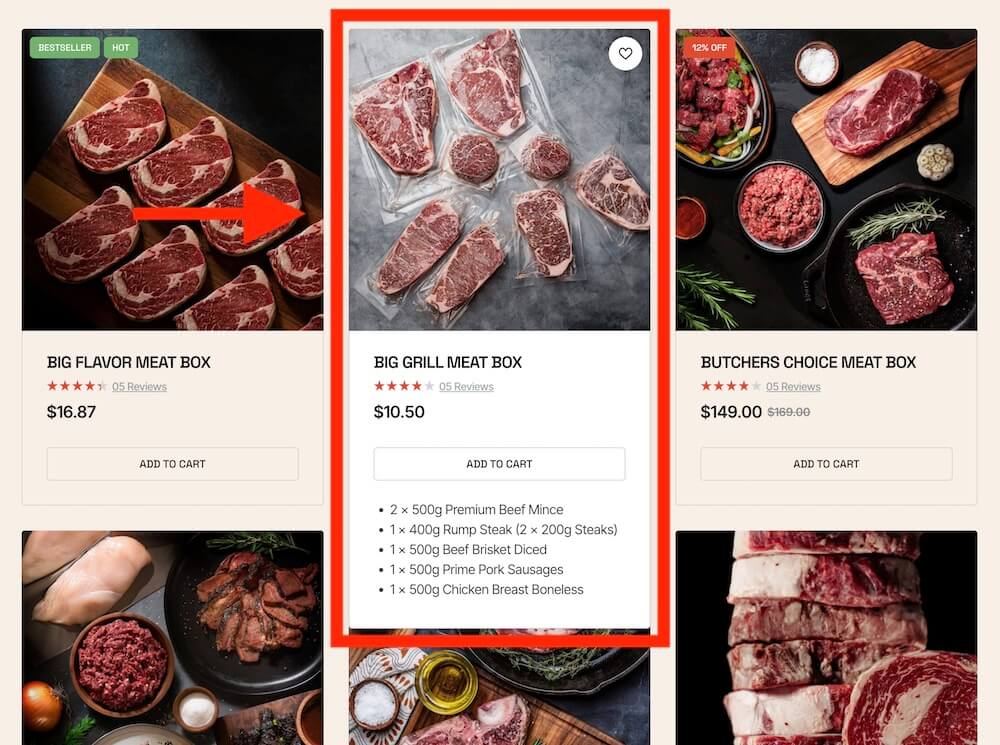
Yes, especially if you want to increase order value and make buying easier.
Not everyone wants to build a basket cut by cut.
A well-made meat box can do the thinking for them.
You could offer:
- BBQ boxes: Steaks, burgers, sausages, ribs, chicken, and other grill-ready cuts.
- Family packs: Larger mixed selections built around everyday meals.
- Steak boxes: Ribeye, sirloin, fillet, rump, or premium cuts bundled together.
- Mixed meat boxes: Beef, pork, lamb, poultry, and sausages in one order.
- Monthly subscriptions: A recurring box delivered every few weeks or once a month.
- Seasonal bundles: Christmas roasts, summer BBQ packs, Easter lamb, or winter slow-cooking boxes.
- Farm boxes: A curated selection based on what’s fresh or available from partner farms.
- Gift boxes: Premium steaks, charcuterie, sauces, or specialty cuts packaged for gifting.
Bundles can also make pricing simpler.
Instead of asking shoppers to compare ten individual products, you give them one clear option with a set value and purpose.
Subscriptions take that a step further.
They can create repeat business and make ordering more convenient for customers who buy meat regularly. But they only work well if the contents, delivery schedule, cancellation terms, and pricing are crystal clear.
That part matters.
A vague “mystery meat box” may sound fun once. A reliable monthly box with clear value is much easier to trust.
For this kind of setup, Steako and MeatHouse are particularly interesting because both lean more heavily into boxes, bundles, and recurring-order style shopping.
If your butcher business is still small, I wouldn’t force subscriptions from day one.
Start with a few strong bundles.
See what sells.
Then turn the most popular ones into recurring boxes later.
Note: If delivery is the main part of your business rather than just an extra option, our food delivery WordPress themes offer more layouts built specifically around online ordering and delivery.
How To Make Your Butcher Shop Website Look Premium
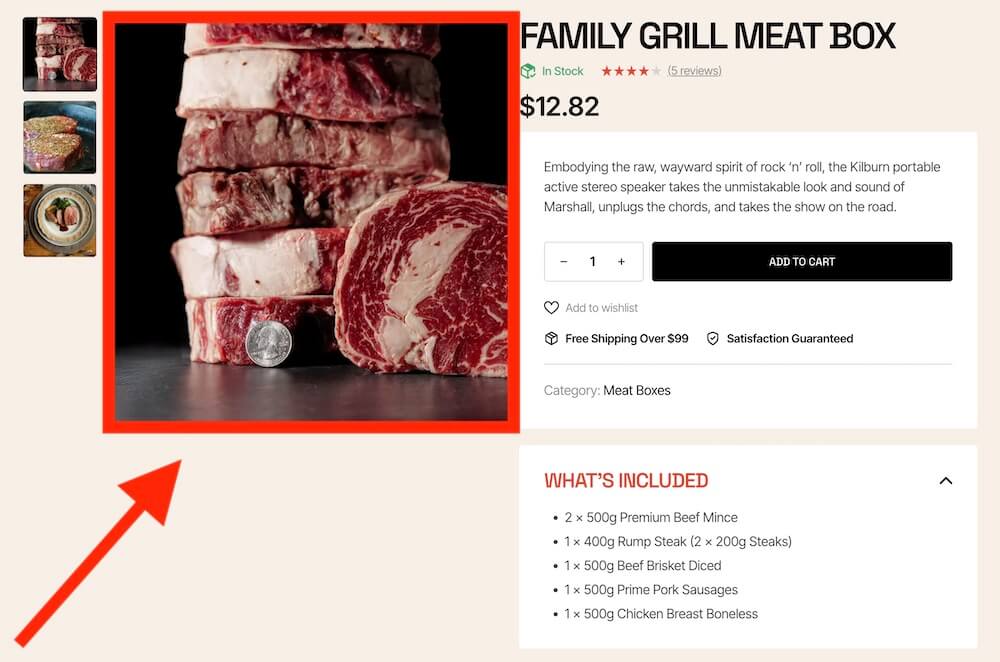
- Use sharp, close-up product photos: Show marbling, texture, fresh cuts, sausages, charcuterie, and packaging in detail. Good meat photography does a huge amount of the selling. (Those detailed meat photos can get heavy fast, so use a WordPress image optimization plugin to keep file sizes down without ruining the product shots.)
- Keep backgrounds simple: Let the products stand out. Wood, stone, dark neutral surfaces, and clean light backgrounds usually work better than busy designs.
- Show the cut properly: Don’t rely on one image. Add different angles, packaging shots, and ideally a cooked example where it makes sense.
- Keep labels consistent: Product names, weights, prices, origin, and key details should follow the same structure across the shop. Clean. Predictable. Easy to scan.
- Tell the sourcing story: If you work with local farms, grass-fed cattle, pasture-raised animals, organic producers, or specialist suppliers, show it. That can add more perceived value than decorative design ever will.
- Avoid overusing red: Red fits the niche, but too much quickly becomes loud and dated. Use it as an accent rather than painting the entire website with it.
- Choose simple typography: Strong headings and easy-to-read product copy work better than overly decorative fonts. The meat should be the star.
- Use darker tones carefully: Charcoal, deep brown, and black can create a premium look, especially for steak and Wagyu brands. Just keep product information highly readable.
- Make weights and prices obvious: Premium doesn’t mean mysterious. Customers should never have to hunt for pack size, price per kilogram, or what’s actually included.
- Show the packaging: Vacuum packs, branded boxes, insulated delivery packaging, and gift presentation can make the business look much more polished.
Conclusion: Which Butcher Shop WordPress Theme Should You Choose?
The right butcher shop WordPress theme really comes down to how you sell.
If you want the strongest all-around option, Steako is my first pick.
It handles fresh meat, meat boxes, bundles, subscriptions, delivery, pickup, seafood, and premium cuts without making the store feel overloaded.
Go with Bubulla if your catalog is broader. It works especially well for farms, seafood sellers, and shops mixing beef, pork, poultry, fish, caviar, and other fresh products.
MeatHouse is the obvious choice if boxes and recurring orders are a big part of the business. Monthly subscriptions, family packs, and curated meat bundles are where it shines.
For a more polished, modern online butcher shop, Meatlers is a strong option. I also like its Butcher’s Guide and content potential, especially if you want to publish cooking tips, cut guides, or storage advice.
And if you simply want a straightforward WooCommerce meat store without extra complexity, Butcher keeps things simple.
Before choosing, I’d check three things:
- how the product pages handle weights, cuts, and variations
- whether delivery, pickup, or subscriptions fit your business model
- how easy the shop is to browse on mobile
That matters more than picking the theme with the fanciest homepage.
Your customers want fresh meat, clear information, and an easy checkout.
Give them that, and you’re already in a good place.
FAQs About Butcher Shop WordPress Themes
What is the best WordPress theme for a butcher shop?
For most butcher shops, Steako is the strongest all-around choice. It handles meat boxes, subscriptions, delivery, pickup, premium cuts, seafood, and standard WooCommerce shopping in one setup.
Can I sell fresh meat with WooCommerce?
Yes. WooCommerce can handle fresh meat, steaks, sausages, poultry, seafood, charcuterie, and other butcher-shop products just like a regular online store.
Can WooCommerce handle products sold by weight?
Yes, but the exact setup depends on how you price your products. You can sell fixed-weight packs, offer several weight variations, or use an additional WooCommerce plugin for more advanced weight-based pricing.
Can I sell meat boxes and bundles?
Yes. BBQ boxes, family packs, mixed meat boxes, steak selections, and seasonal bundles can all work well online.
Can I offer meat subscriptions?
Yes. You can create weekly, monthly, or recurring meat boxes with the right subscription setup.
Can I offer local delivery and store pickup?
Yes. WooCommerce supports both local delivery and pickup-style setups.
Can I sell steaks, sausages, seafood, and charcuterie on the same website?
Yes. In fact, several themes in this roundup are designed for broader fresh-food catalogs.
Do butcher shop WordPress themes work with Elementor?
Yes, many do. Steako, MeatHouse, and Meatlers use Elementor, which makes it easier to customize pages, product sections, banners, typography, and other store content visually.
Do I need a butcher-specific WordPress theme?
Not necessarily. A strong WooCommerce theme can work perfectly well if you’re comfortable building the meat-specific pages yourself.